
Last updated October 15, 2026
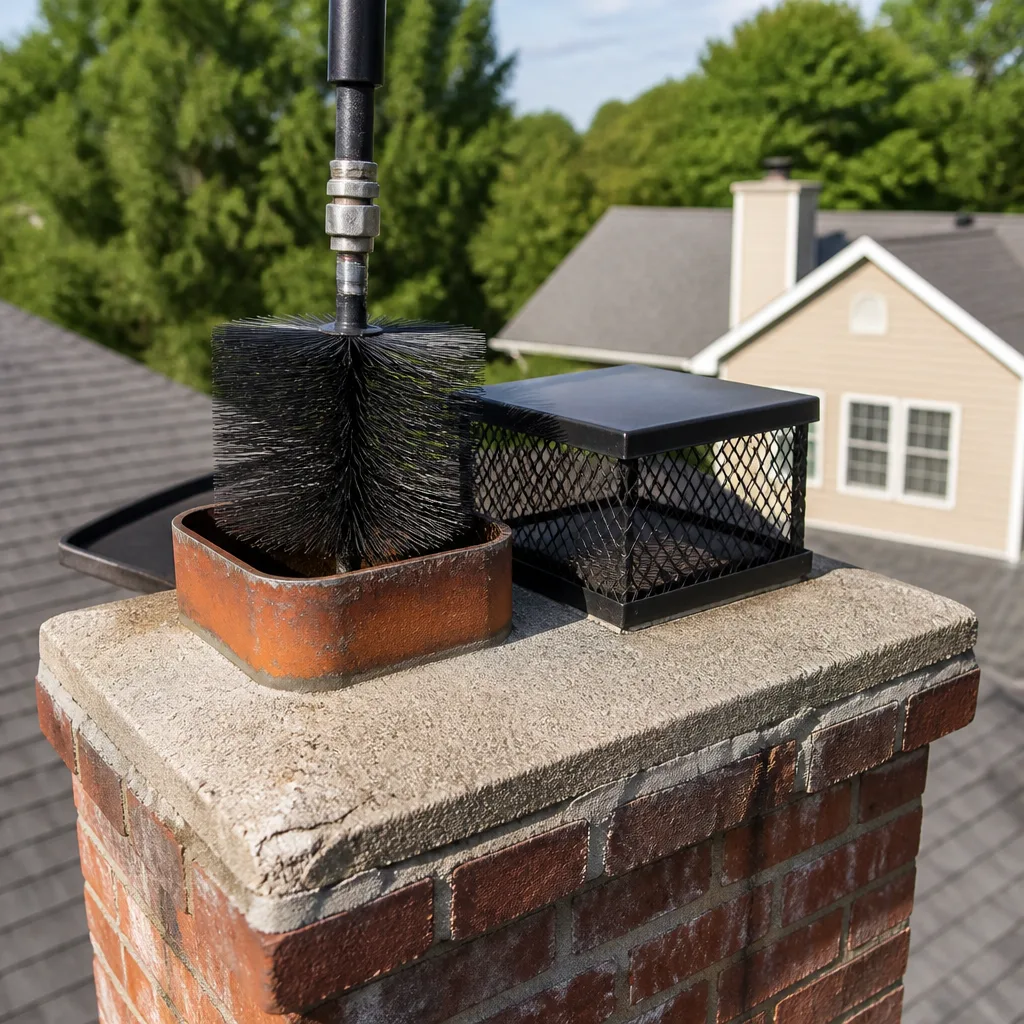 Sweep & inspection
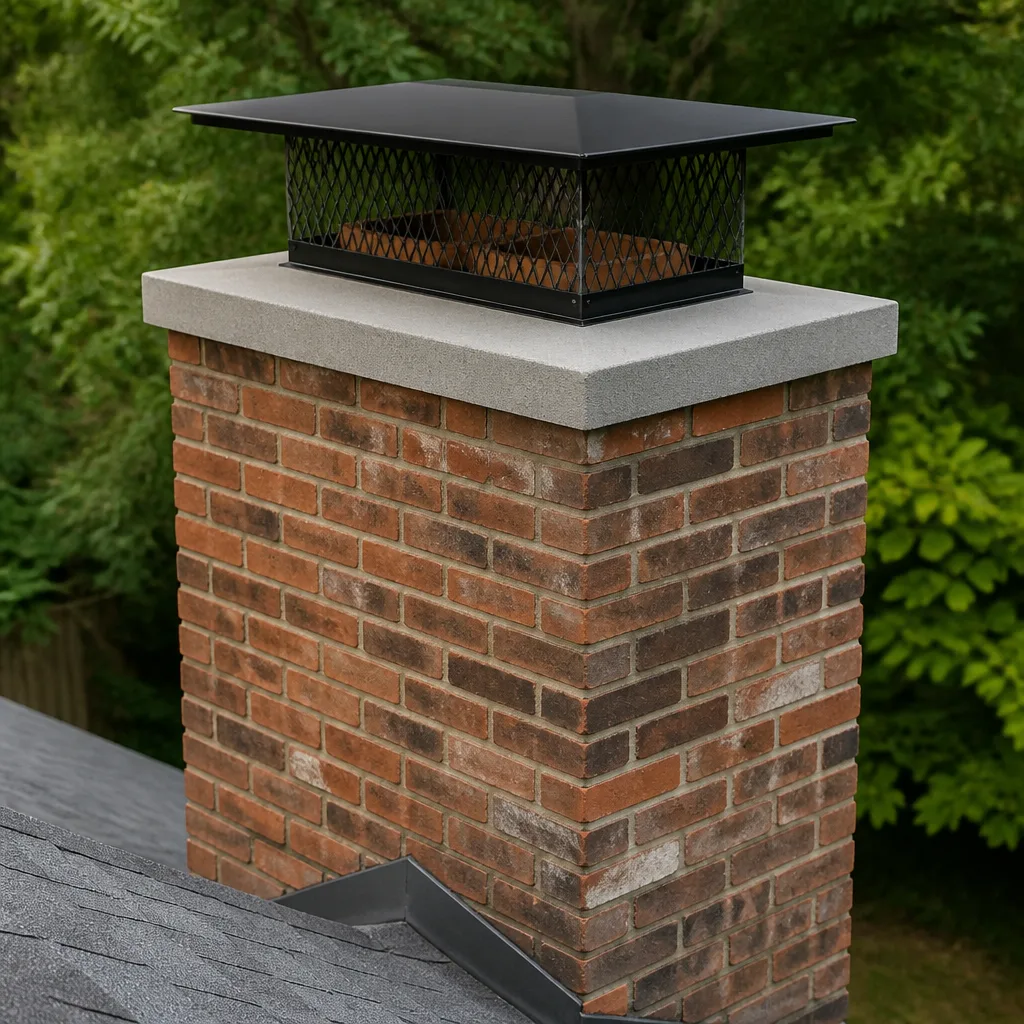 Caps & crowns
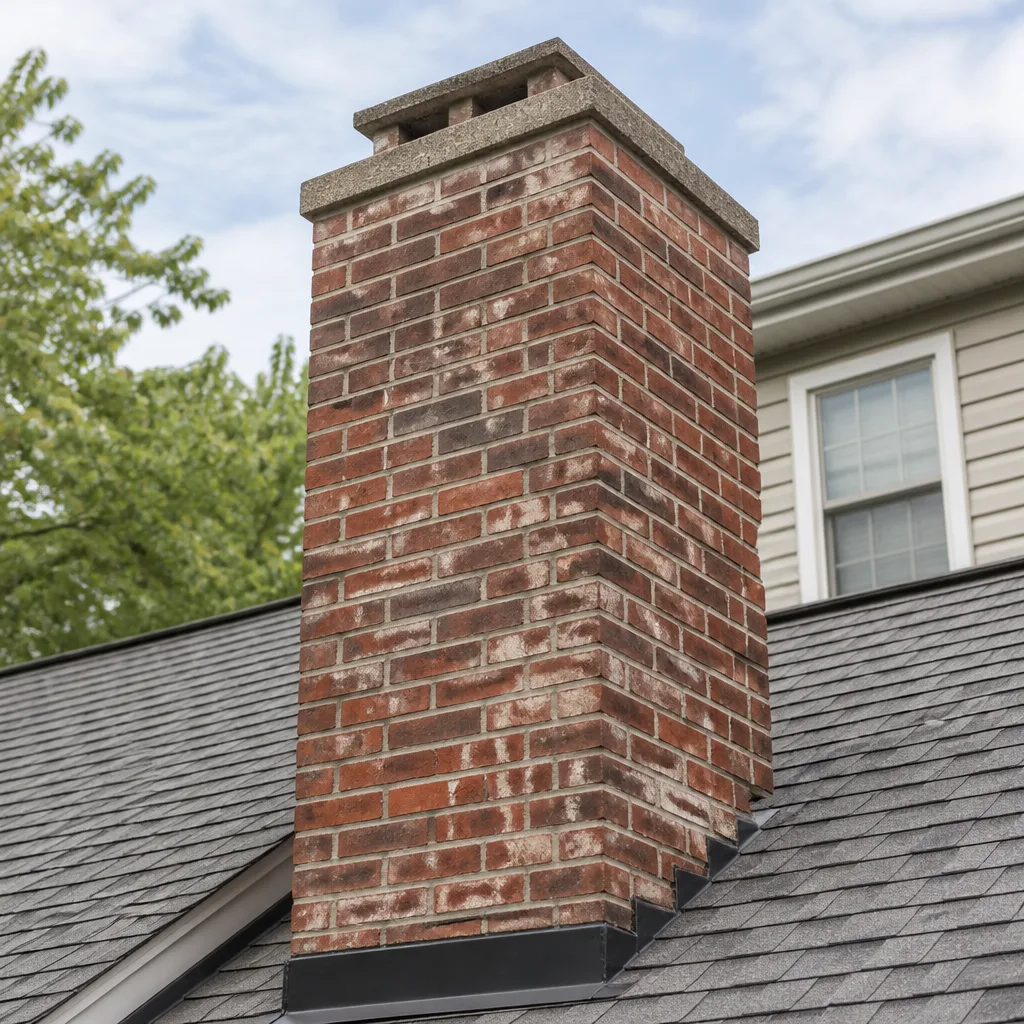 Masonry repair
Level 1 sweep and inspection to the NFPA 211 annual standard - flue, crown, cap, and flashing checked and photographed
Chimney sweep logs do not sweep chimneys. They loosen some creosote - which then falls where a brush and vacuum still have to collect it.
The Complete Guide to Chimney Cleaning in Yonkers
A chimney can pass a visual “looks clean” test and still have Stage 2 creosote coating the upper flue where a flashlight never reaches. That’s the kind that burns at 2,000°F, and it’s exactly what we find when we run a camera up flues in Yonkers homes where the last sweep was a bargain job. This guide walks you through what actually happens inside your chimney during a proper cleaning, section by section, so you can verify the work was done right instead of taking anyone’s word for it. You’ll learn how to read creosote staging, what a real before-and-after photo shows, how Hudson Valley weather affects buildup, and what Yonkers homeowners should expect on a written service report.
Quick Answer
Chimney cleaning in Yonkers typically costs $189 to $329 for a standard sweep, depending on flue condition, creosote stage, and accessibility. A complete cleaning covers four distinct sections, the firebox, smoke chamber, flue liner, and crown, and should include photo documentation of each. In Yonkers, most wood-burning chimneys need cleaning every 50 to 70 fires, or once per burning season, whichever comes first. For more on timing, see our Seasonal Chimney Cleaning Care for Yonkers: Year-Round Homeowner’s Guide.
Styles & brands we work with
Table of Contents
- What a Complete Cleaning Actually Involves
- The Three Creosote Stages Explained
- Yonkers-Specific Factors That Affect Your Chimney
- How to Read Before-and-After Photos Like a Pro
- What Your Written Post-Service Report Should Include
- How Often Should You Clean Your Chimney in Yonkers?
- What Gets Skipped in a Cut-Rate Sweep
- Common Mistakes to Avoid
- When to Call a Professional
- Frequently Asked Questions
What a Complete Cleaning Actually Involves
A real chimney cleaning is not one pass with a brush. It’s four separate sections, each with its own failure modes and each requiring different tools. When Hadley Chimney Yonkers techs clean a flue in Yonkers, here’s the sequence, and what gets checked at every stop.
1. The Firebox
The firebox is the brick or masonry box where your fire burns. During a cleaning, we remove loose ash and debris from the firebox floor, then inspect the refractory brick for spalling (the flaking or popping that happens when moisture gets trapped in brick). We check the firebrick joints for gaps and the ash dump if your fireplace has one. Yonkers homes built before 1960 often have fireboxes with lime-based mortar, which degrades faster than modern refractory cement, so we’re looking for that specifically in older neighborhoods like Park Hill and Lincoln Park.
2. The Smoke Chamber
This is the section most often skipped in a cheap sweep because it requires a separate brush head and more time. The smoke chamber sits above the firebox and below the flue, and its corbeled brick steps are creosote magnets. If a tech only runs a flue brush and never touches the smoke chamber, you’re leaving behind a significant portion of the flammable material. A proper cleaning includes brushing the smoke chamber walls and checking the parging (the smooth refractory coating) for cracks.
3. The Flue Liner
The flue liner is the vertical channel that carries smoke and gases up and out. In Yonkers, we see three liner types in regular rotation: clay tile (common in homes built from the 1920s through the 1970s), stainless steel (common in retrofits and newer construction), and occasionally cast-in-place refractory liners. A proper sweep uses a correctly sized brush matched to the liner dimensions, not one generic brush. A brush too small just polishes the creosote; a brush too large can crack clay tile. We’re also watching for smoke-shelf accumulation at the bottom of the flue.
4. The Crown and Chase Cover
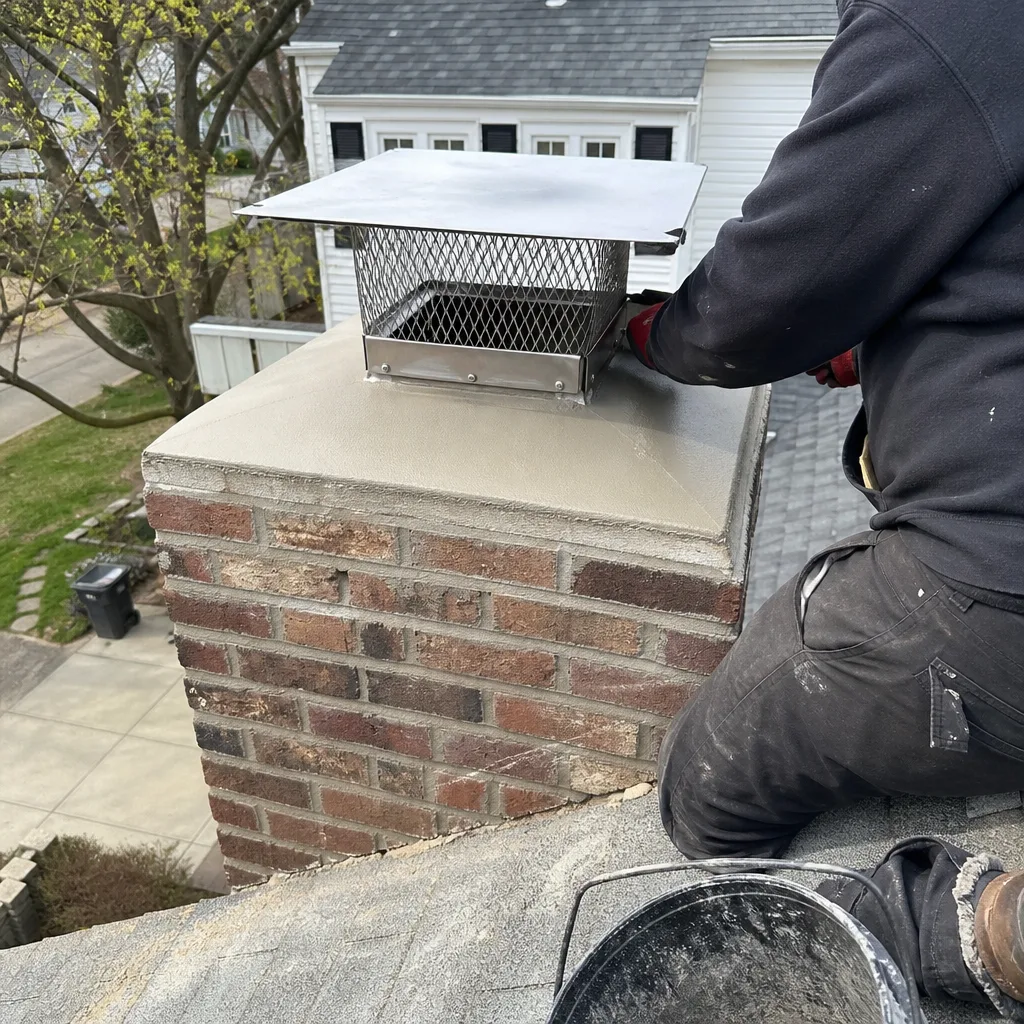
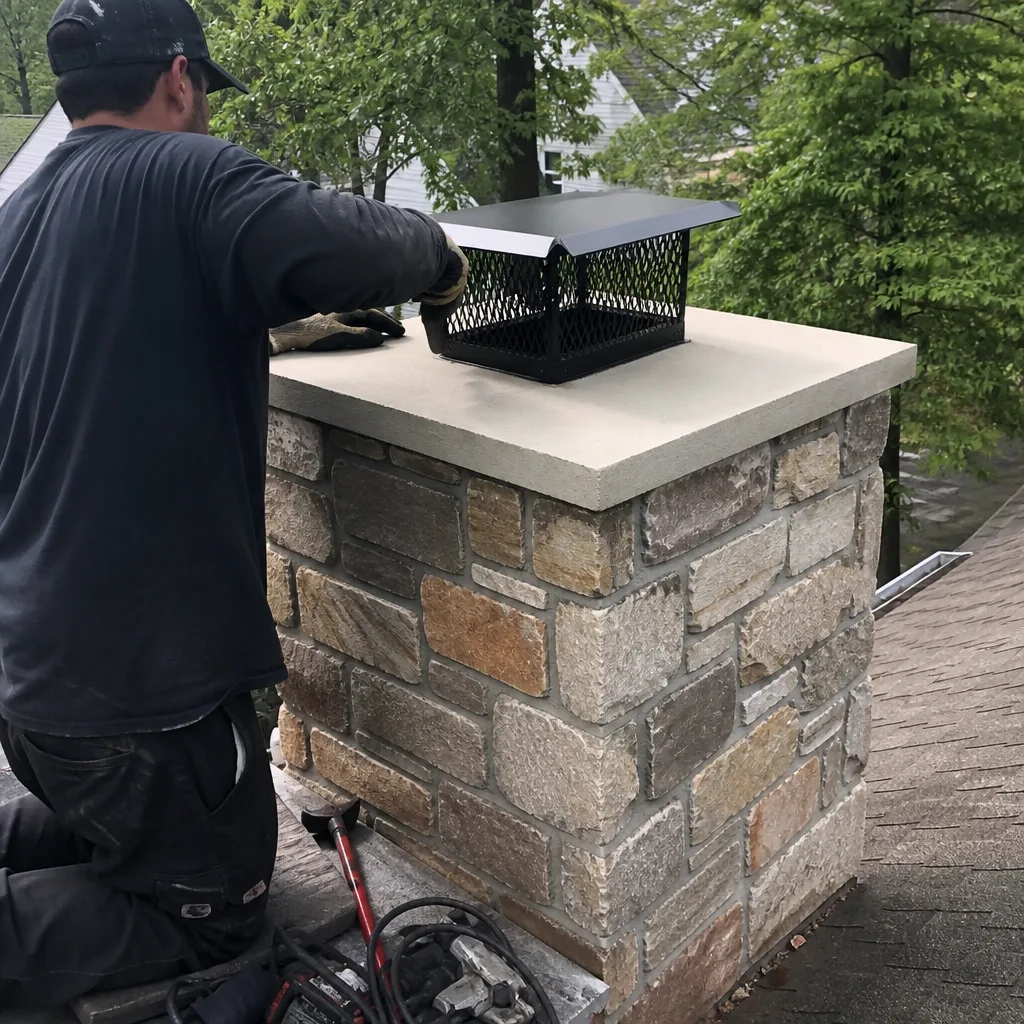
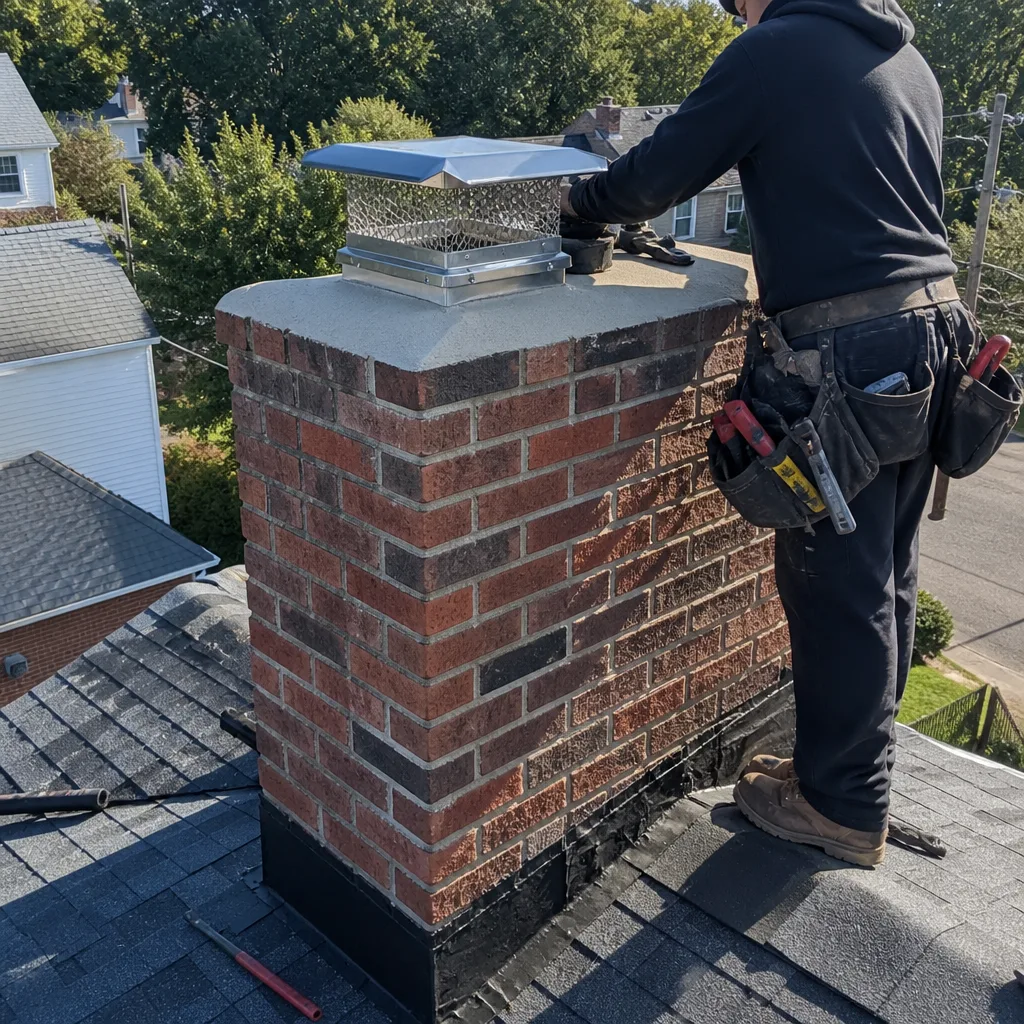
The crown is the concrete or mortar cap at the top of the chimney. Its job is keeping rain out, and in Yonkers it gets hammered by freeze-thaw cycles all winter. During every cleaning, we inspect the crown for cracks, spalling, and separation from the flue tile. We also check the rain cap or spark arrestor for blockages and animal damage. This part matters as much as the brushing because a failed crown will pour water straight into the flue and accelerate creosote formation. If you’re looking at chimney repair in Yonkers, crown issues are the single most common starting point.
Here’s the thing that surprises most Yonkers homeowners: the visible firebox is only about 15 percent of the total surface area of the chimney. The other 85 percent is hidden above the damper, which is why photo documentation of the upper sections is the only way to confirm the work actually happened.
The Three Creosote Stages Explained
Creosote is the flammable tar-like residue that condenses on the inside of your chimney when wood smoke cools before it exits. In Yonkers, where winters are damp and many homes burn mixed woods, creosote builds faster than in dry climates. Knowing the three stages helps you understand what a technician quotes and why.
Stage 1: Soot Dust
Stage 1 creosote is mostly fine black soot dust that brushes off easily. It accounts for roughly 70 percent of what we see in regularly used Yonkers fireplaces. Stage 1 is low risk and responds to a standard sweeping. This is the stage you want to catch. A standard chimney sweep in Yonkers will handle Stage 1 with a brush, vacuum, and about an hour of work from setup to cleanup.
Stage 2: Glazed Flakes
Stage 2 creosote looks like dry, crunchy tar flakes or ribbons that adhere to the flue walls. It’s shiny in spots and can measure a quarter inch thick in the upper flue where temperatures drop fastest. Stage 2 requires more aggressive mechanical removal: rotary loop heads, or in some cases, chemical treatment followed by rebrushing. Stage 2 is the stage where a standard brush won’t fully clean the flue, and it’s the stage most commonly missed in bargain sweeps. A visual inspection from the firebox will not reveal Stage 2 in the upper flue. You need a camera.
Stage 3: Glazed Tar
Stage 3 creosote is a dense, glassy, baked-on tar that can resemble obsidian. It ignites at around 2,000°F and is the direct cause of most chimney fires. At this stage, rotary chains or chemical removal systems are usually required, and sometimes the only real fix is a new liner. Stage 3 typically follows years of burning unseasoned wood, smoldering fires, or a flue that was never properly cleaned. In our experience, we see more Stage 3 buildup in Yonkers homes where fireplaces were used as secondary heat sources all winter and cleaned once every few years, if at all.
The distinction matters because the response is not the same. Stage 1 calls for a standard sweep. Stage 2 calls for a deep clean with rotary tools and a camera inspection afterward. Stage 3 often means liner replacement. A technician who quotes a $99 sweep without checking for Stage 2 or Stage 3 first is pricing a service they haven’t diagnosed yet. Before you hire, read our How to Hire a Chimney Cleaning Contractor in Yonkers: A Step-by-Step Guide. The written price before work starts should follow the diagnosis, not precede it.
Yonkers-Specific Factors That Affect Your Chimney
Yonkers has a housing stock and climate profile that makes chimney maintenance different from other Westchester communities. Here’s what works against your flue, and what to plan around.
Older Housing Stock
Homes in neighborhoods like Ludlow, Bryn Mawr, and Dunwoodie were largely built between the 1920s and 1960s, which means most Yonkers chimneys have clay tile liners that are now 60 to 100 years old. Clay tile cracks under thermal stress, and the tiny cracks that form are where creosote condenses and where water freezes and expands every winter. This is the central reason older Yonkers homes need more frequent inspection. The chimney may look fine from the street, but the upper flue tile may have a crack that’s been quietly widening for years. That’s the kind of issue a camera inspection catches, and it’s the kind of issue that turns a $250 sweep into a liner conversation. Our Chimney Repair in Yonkers work starts with that same camera, so nothing is recommended without evidence you can see.
Mixed-Fuel Homes
Many Yonkers homes burn wood in a fireplace while also running a gas-fired boiler or water heater that vents through the same chimney, often through a separate flue. That combination means two different types of buildup: wood produces creosote, while gas produces a more acidic, water-heavy exhaust that eats at lime mortar from the inside. When both fuels share a chimney structure, problems in one flue often indicate problems in the other. If you also have a gas fireplace, read our Gas Fireplace Repair in Yonkers page to understand how the two systems interact.
Hudson Valley Humidity
The Hudson Valley runs humid, and Yonkers gets the full brunt of it. Humidity accelerates creosote formation because moisture in the flue gives creosote particles something to condense on. A dry flue might produce Stage 1 dust; the same fire in a damp Yonkers chimney produces Stage 2 flakes. Homes near the Bronx River or the Saw Mill River, where ambient moisture is higher, tend to build creosote faster than homes up on Nodine Hill or Crestwood. That’s not a reason to panic, it’s a reason to be consistent with annual inspection.
Say you have a home in the Armour Villa neighborhood built in 1935, with its original clay liner, burning oak in the fireplace and running a gas boiler through a second flue. That chimney needs more attention than a newer build in a drier section of the city. We’re not generalizing; we’re describing what we see week after week.
How to Read Before-and-After Photos Like a Pro
Photo documentation is the single most useful tool a homeowner has to verify chimney work, and it’s a core part of The Relay Visibility Guarantee on every Hadley Chimney Yonkers visit. But a photo only helps if you know what to look for. Here’s how to evaluate the images your tech hands you.
The “Brushed Flue” vs. “Cleaned Flue” Test
A brushed flue looks blacker. That sounds backwards, but it’s true. A quick brush pass knocks loose the soft Stage 1 soot and leaves behind the darker, adhered Stage 2 and Stage 3 creosote underneath. So the “after” photo from a rushed sweep actually shows a flue that looks dirtier than the “before.” That’s your tell.
A truly cleaned flue shows visible brick or liner texture in the after photo. On clay tile, you’ll see the slight color variation between tiles. On stainless steel liner, you’ll see the circular weld seams clearly. If the after photo is still uniformly black, the flue was not fully cleaned. You are not looking for “cleaner.” You are looking for surface texture.
The Upper Flue Matters Most
Ask where the photos were taken. A tech can snap a great shot of the firebox, which gets the most direct heat and often stays the cleanest. The upper flue, right below the crown, is where creosote condenses fastest and where shortcuts show. Demand photos from the top and middle sections of the flue, not just the bottom. Every Hadley chimney cleaning in Yonkers includes camera shots from all flue sections before and after, because the top of the flue is where missed work gets exposed.
The Smoke Chamber Shot
If your tech does not show you the smoke chamber, ask to see it. That’s where cheap sweeps cut corners. A before-and-after pair of the smoke chamber, showing the corbeled brick steps and the parging, is one of the strongest indicators of a thorough job. If those photos aren’t available, that section probably wasn’t touched.
| Photo Check | What a Rushed Sweep Shows | What a Real Cleaning Shows |
|---|---|---|
| Flue texture | Uniformly black walls | Visible tile edges or steel seams |
| Smoke chamber | No photo, or still coated | Brick steps visible, parging exposed |
| Firebox | Clean (low-effort win) | Clean with joints inspected |
| Upper flue | No photo provided | Clear shot from below the crown |
| Crown | Not photographed | Shot from roof showing cracks or clean surface |
You’re not being difficult by asking for photos. You’re holding a trade accountable the same way you’d expect a mechanic to show you the worn brake pad before charging to replace it. The Relay Visibility Guarantee exists because chimney work has run on trust for too long, and trust is a poor substitute for evidence.
What Your Written Post-Service Report Should Include
A proper chimney cleaning concludes with a written report, not a verbal “all done.” Here’s what belongs in the document and why each item matters, including at resale and for insurance claims.
1. Creosote Stage Classification
The report should state the creosote stage found and where: Stage 1 in the firebox and lower flue, Stage 2 in the upper flue, etc. This matters at resale because a buyer’s inspector will ask when the chimney was last cleaned and what was found. A dated report with stage classification answers both.
2. Liner Condition Notes
Include a line about the liner: intact clay tile, minor spalling, cracked section, or stainless steel in good condition. If a crack was found, the report should say where and how significant. Insurance companies dealing with chimney fire claims look for documented liner condition. A written note from a professional sweep that the liner was inspected and passed is worth keeping in the same file as your policy.
3. Photo Evidence Summary
The report should reference the photos taken and what they show. At Hadley, the digital invoice includes the before-and-after photos embedded, so the record and the proof live in the same document. If your tech’s report has no photos attached, ask why.
4. Recommendations, Ranked
If the tech recommends work beyond the sweep, the report should rank it: “Needs attention this season,” “Safe to monitor for now,” or “Address before next burning season.” A blanket recommendation to replace a liner with no photo and no urgency ranking is not a recommendation, it’s a sales pitch. Our rule at Hadley Chimney Yonkers on every visit is simple: if we recommend it, we show you the camera still that proves it.
5. Guarantee Terms in Writing
Every Hadley repair is backed by the 365-Day Done Right Promise, in writing, on every single job. That means if a repair fails within a year, we come back and re-fix it free. Not an upsell, not a promotion, a standing commitment printed on the invoice. Keep that document. If the repair fails, hand it back to us and we honor it.
When it comes time to sell your Yonkers home, your chimney report sits in the disclosure conversation alongside the boiler service records and the roof certification. Homes in competitive listings with documented chimney maintenance move cleaner through inspection, and the buyer’s inspector will respect dated, photo-backed documentation a lot more than a verbal assurance that “we always had it cleaned.”
How Often Should You Clean Your Chimney in Yonkers?
The standard answer from the National Fire Protection Association and every qualified sweep is: inspect annually, clean as needed. But “as needed” frustrates people who want a concrete number, so here’s one for Yonkers specifically.
If you burn seasoned hardwood in an open fireplace for evening fires, three to four nights a week from November through March, you’re putting somewhere around 60 to 80 fires on your chimney per season. That’s a cleaning every season. If you burn only occasionally, say 20 to 30 fires a year, you can typically go 18 to 24 months between cleanings. If you burn unseasoned wood, pine, or construction scraps, or if your fires smolder rather than burn hot, you’re producing more creosote per fire and need cleaning sooner.
Gas fireplaces are different. Gas burns cleaner but still produces acidic condensation that degrades metal and masonry over time. An annual gas fireplace service in Yonkers checks the venting, igniter, and glass seal, and that service is often faster and less expensive than a wood chimney sweep.
Here’s the Yonkers-specific part: if you live in an older home near the rivers with a clay liner and you burn every week, one cleaning per year is the floor, not the ceiling. If you notice anything unusual, white staining on the exterior brick, a smell that goes from pleasant woodsmoke to acrid tar, or smoke entering the room on startup, call sooner. That’s not buildup you can burn off; it’s a signal the flue isn’t drafting the way it should.
What Gets Skipped in a Cut-Rate Sweep
The $79 or $99 chimney sweep is a real thing in the Yonkers market, and it usually works like this: one technician, one brush pass up the flue, a quick vacuum of the firebox, and a handshake at the door. Here’s what that price point typically leaves out, section by section.
- The smoke chamber: requires a second brush head and often ladder repositioning. Cut-rate sweeps skip it because it’s time.
- The upper flue: requires getting on the roof. Many low-cost providers clean only from the firebox up, which means the top third of the flue, the creosote-heavy section, stays untouched.
- The crown inspection: requires roof access. If no one got on the roof, no one inspected the crown.
- The camera check: this is the biggest miss. Without a camera, Stage 2 and Stage 3 creosote go undetected until a chimney fire or a puffback forces the issue.
- Written documentation: a verbal “you’re all set” is not documentation. A cut-rate sweep ends with an illegible paper receipt, if that.
- Guarantee: if the sweep turns out to be incomplete and a fire starts, there is no written guarantee, no done-right promise, no recourse. The 365-Day Done Right Promise applies to repairs specifically, but the point stands: written accountability beats a handshake every time.
The economics are simple. A real cleaning takes longer because it includes four sections, roof access, camera documentation, and a written report. The price reflects the time. The Relay Standard, which governs every Hadley Chimney Yonkers home visit, requires photo documentation and a written price before work starts. A company that can’t afford to document its work probably didn’t do all of it.
Common Mistakes to Avoid
- Burning unseasoned wood: green wood produces roughly three times the creosote of seasoned wood because the fire spends its energy boiling water instead of burning clean. Yonkers tree services sell cut rounds that need 6 to 12 months of split-and-stack drying before they’re fireplace ready.
- Relying on creosote-sweeping logs: chemical logs can loosen Stage 1 dust, but they won’t remove Stage 2 or Stage 3 creosote. They are a maintenance aid, not a substitute for mechanical brushing. We’ve seen homeowners in Yonkers burn a log and call it cleaned, then have a chimney fire the next season.
- Cleaning from the firebox only: some services, especially low-cost ones, never get on the roof. The upper flue is where creosote concentrates, and if no one inspected it, the cleaning is incomplete regardless of what the firebox looks like.
- Ignoring the smoke smell in summer: a lingering smoke odor in July usually means creosote is absorbing humidity and off-gassing. It’s not a smell to mask with candles, it’s an indicator the flue needs attention before the next burn.
- Not getting a written report: if the only record of your cleaning is a payment receipt, you have no documentation for insurance, resale, or warranty claims. Written reports with photo evidence are the standard, not the upgrade.
- Assume a gas vent needs no attention: gas fireplaces and gas boilers produce acidic exhaust that corrodes liners and mortar joints over time. An annual check of the gas venting path is cheaper than a liner replacement.
When to Call a Professional
Call a chimney professional when you see white staining on the exterior brick (moisture pushing minerals out of the masonry), smell an acrid tar odor even when the fireplace isn’t in use, notice smoke entering the room on startup, or hear the rustle of animal activity in the flue. Also call if you’ve had a chimney fire, however small it seemed, or if your home is newly purchased and the seller produced no documentation of the last cleaning. If you’re in any of these situations in Yonkers, Hadley Chimney Yonkers offers free estimates, and a live person answers (914) 233-3156 around the clock, no voicemail loops.
Frequently Asked Questions
A standard chimney sweep in Yonkers runs $189 to $329, with the range driven by creosote stage, flue height, and whether the smoke chamber and crown require additional attention. Your price is written before work starts, not after. Call (914) 233-3156 and a live person will give you an exact quote, not a range.
You need a new liner if the existing clay tile is cracked, spalled, or separated in a way that lets heat or gases reach the surrounding masonry, or if Stage 3 glazed creosote has compromised the flue wall. If a technician recommends a liner, ask for the camera photo that shows the damage, and rank the urgency. We never recommend a liner in Yonkers without showing you the photo first, and we’ll tell you plainly when the existing liner can safely wait.
For a Yonkers home burning wood three to four nights a week during the cold season, once per year is the standard. Occasional burners can usually stretch to 18 to 24 months. The only way to know for sure is an inspection with a camera, because creosote buildup is not visible from the firebox floor.
You risk a chimney fire, which can reach 2,000°F and crack the flue liner, allowing flames to reach the wood framing of your home. You also risk carbon monoxide backdraft if the flue narrows from creosote and smoke reverses into the living space. In Yonkers, where older homes often have unnoticed liner cracks already, skipping the sweep removes your only early-warning system. Call (914) 233-3156 to schedule an inspection, estimates are free.
A sweep removes the creosote and soot from the firebox, smoke chamber, and flue. An inspection is the diagnostic step, usually camera-assisted, that assesses liner condition, crown integrity, flashing, and clearances. A good company combines both on every visit, which is why the Hadley standard in Yonkers includes before-and-after photos and a written report with every cleaning.
Gas fireplaces don’t produce creosote, but they do produce acidic condensation that corrodes metal venting and masonry over time. An annual gas fireplace service checks the vent path, glass seal, igniter, and carbon monoxide clearance, and it’s a fast, inexpensive visit compared to the cost of a rusted-out vent replacement. See our Gas Fireplace Repair in Yonkers page for what that service includes.
We use trusted trade brands on every job where materials matter: DuraFlex flexible liner systems for relining, HeatShield ceramic repair compound for parging and smoke chamber work, and Copperfield chimney accessories for caps, dampers, and chase covers. These are the brands chimney pros actually rely on, not whatever’s cheapest on the truck. A proper Chimney Sweep in Yonkers should include materials and craftsmanship that hold up, and that starts with the parts.
The Bottom Line
Chimney cleaning in Yonkers is not a checkbox, it’s a four-section job that requires tools, time, and photographic proof. The firebox you can see matters far less than the smoke chamber and upper flue you can’t. Stage 1 creosote brushes off; Stage 3 needs a liner conversation. Older Yonkers housing stock, Hudson Valley humidity, and mixed-fuel venting all accelerate buildup, so annual inspection is the floor, not the ceiling. The discipline is not paying for a sweep; it’s demanding evidence of the work. Hadley Chimney Yonkers makes that standard the baseline: camera photos, written prices, written guarantees, and a live person on the phone, every time. For more guides & resources, explore our blog.
Written by Cory Mitchell, Owner at Hadley Chimney Yonkers, serving Yonkers since 2003.
See the difference
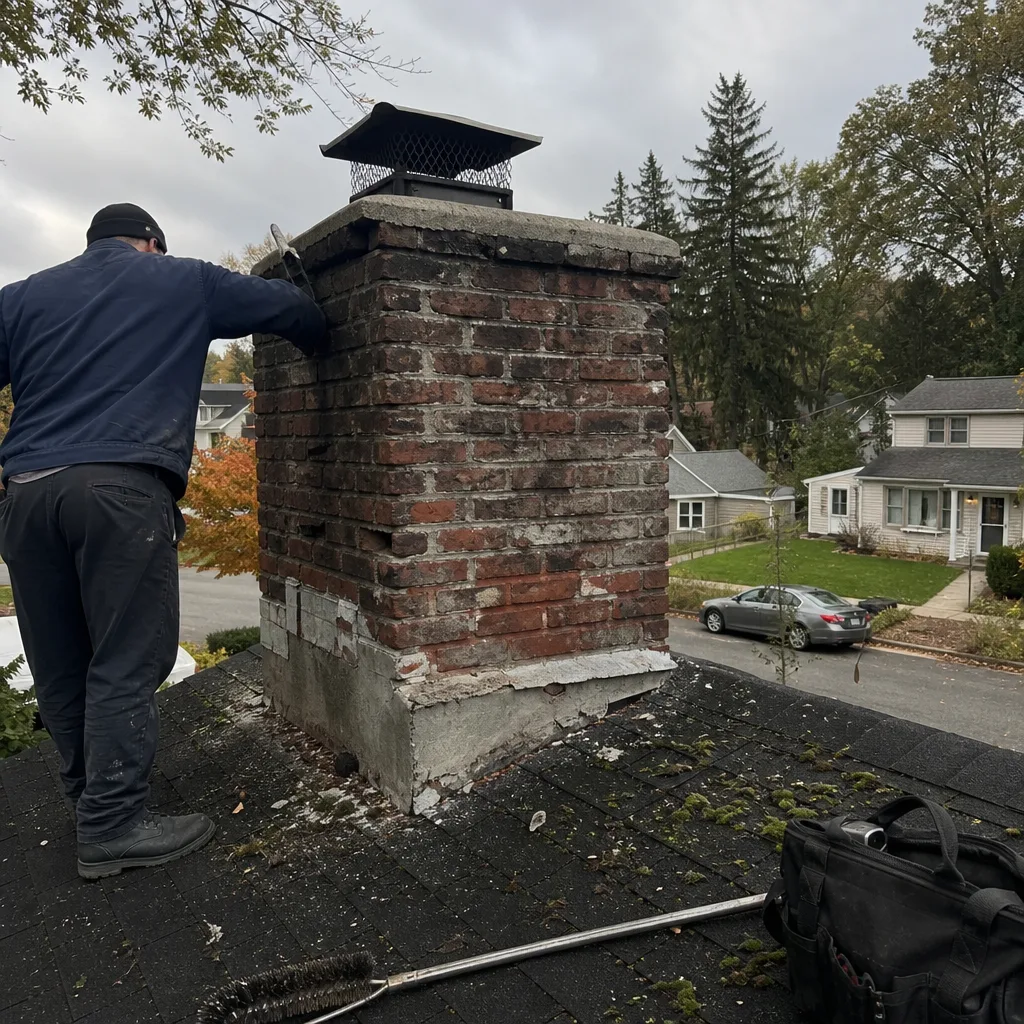 Before
 After
After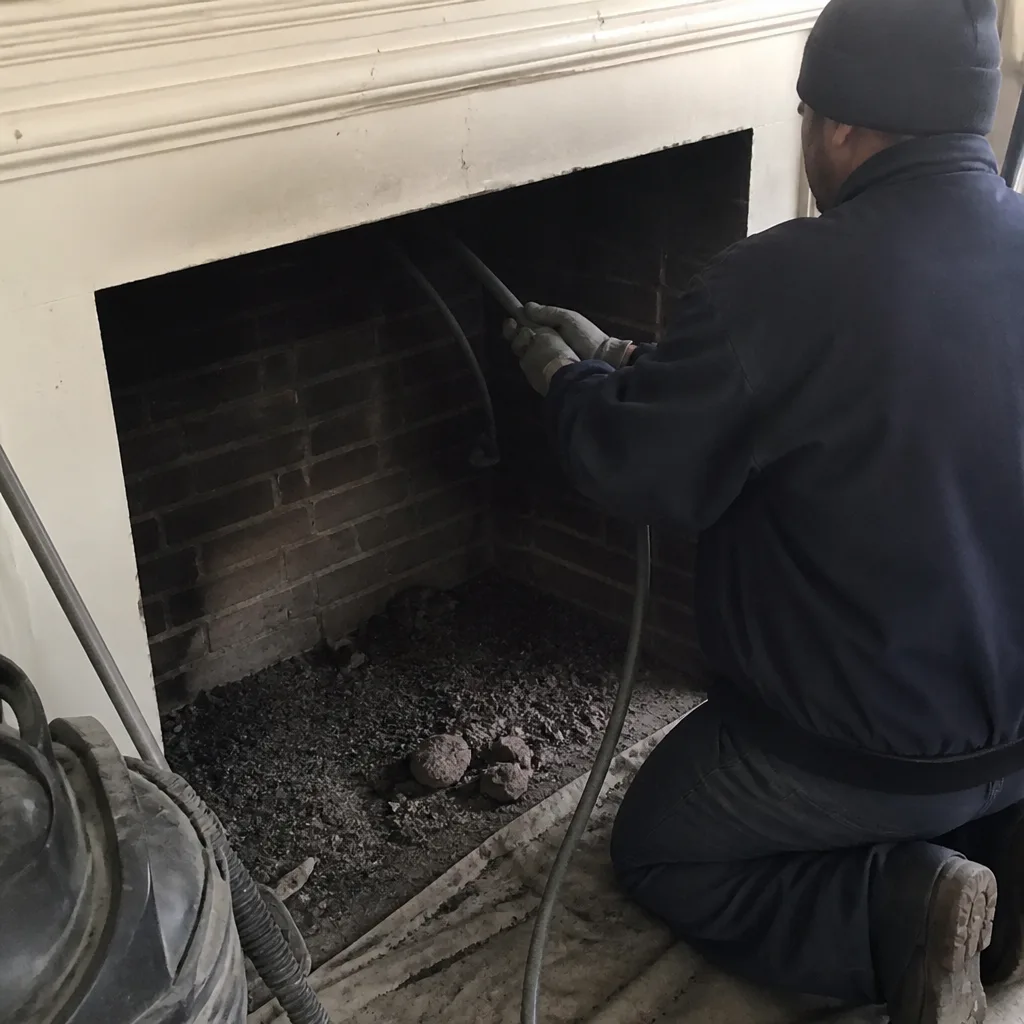 Before
 After
After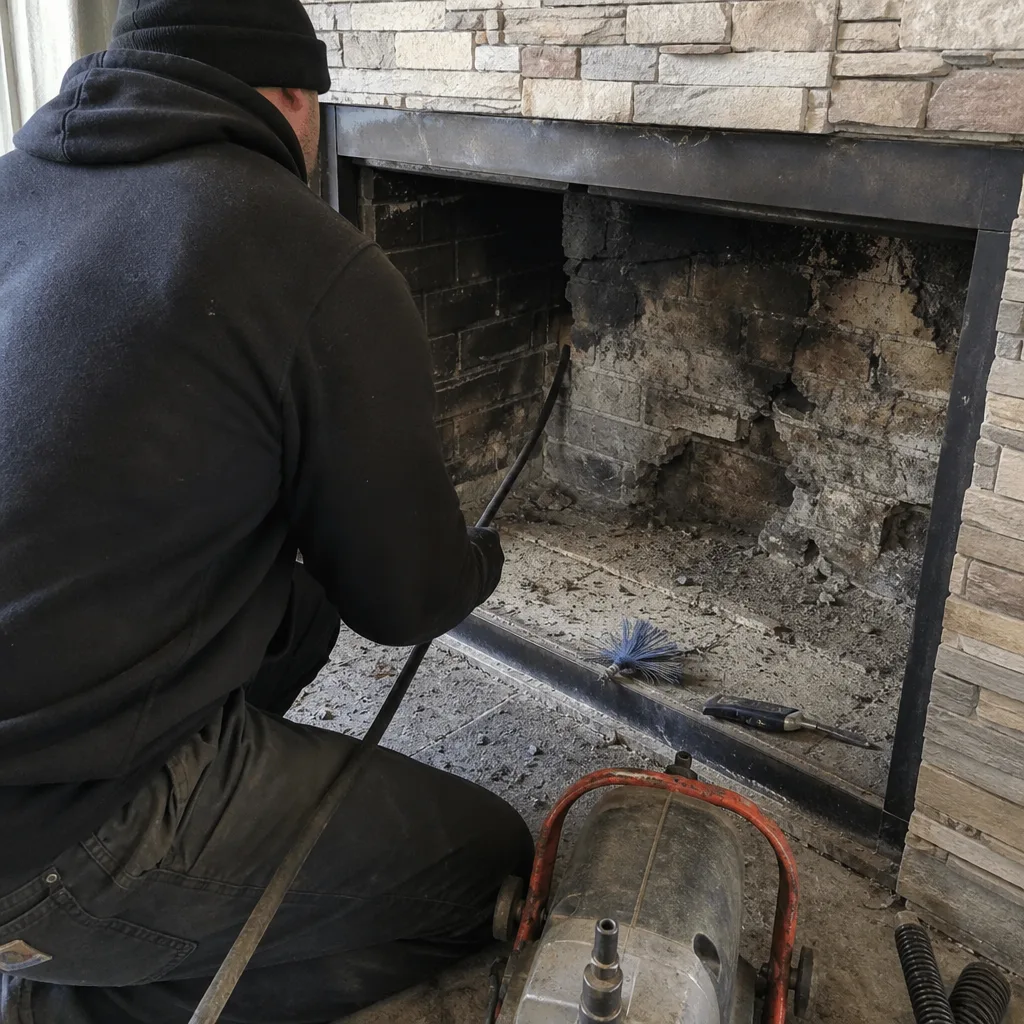 Before
 After
After