
Last updated October 15, 2026
 Sweep & inspection
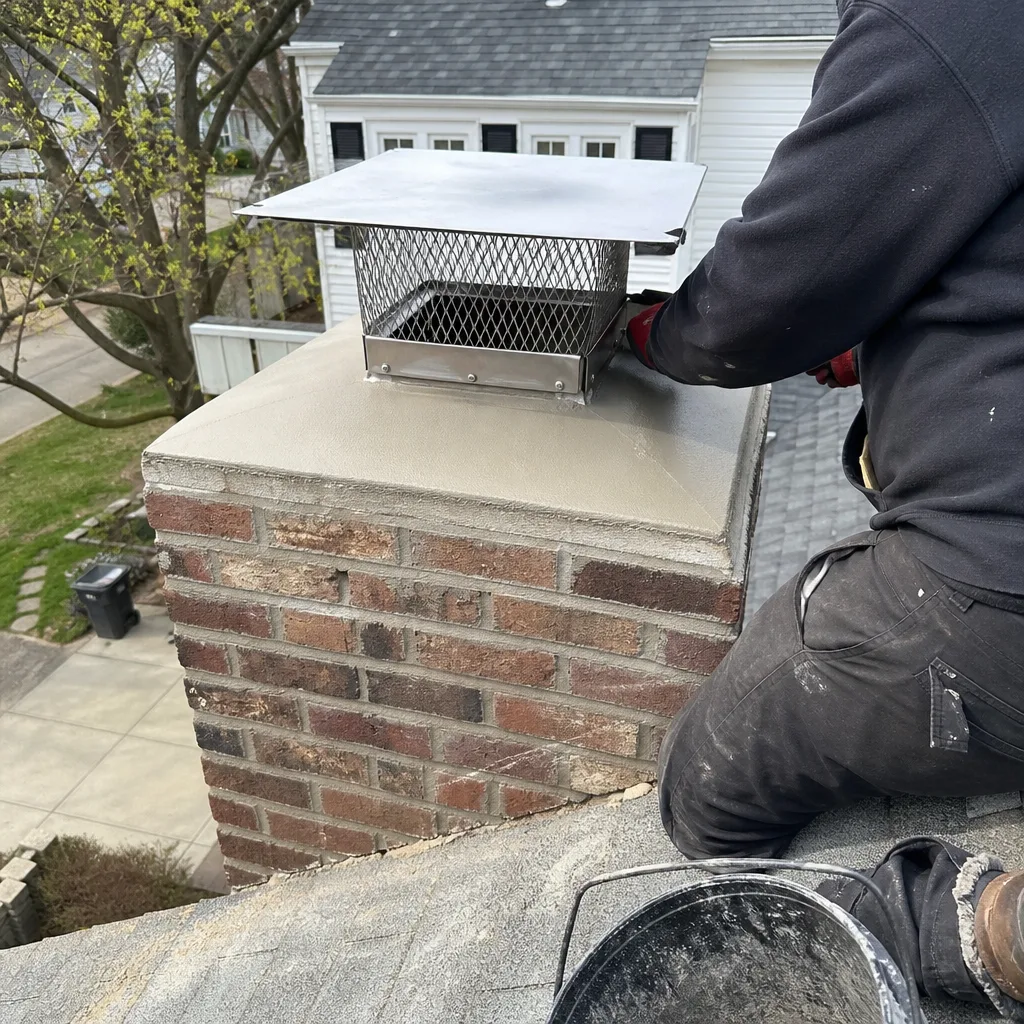
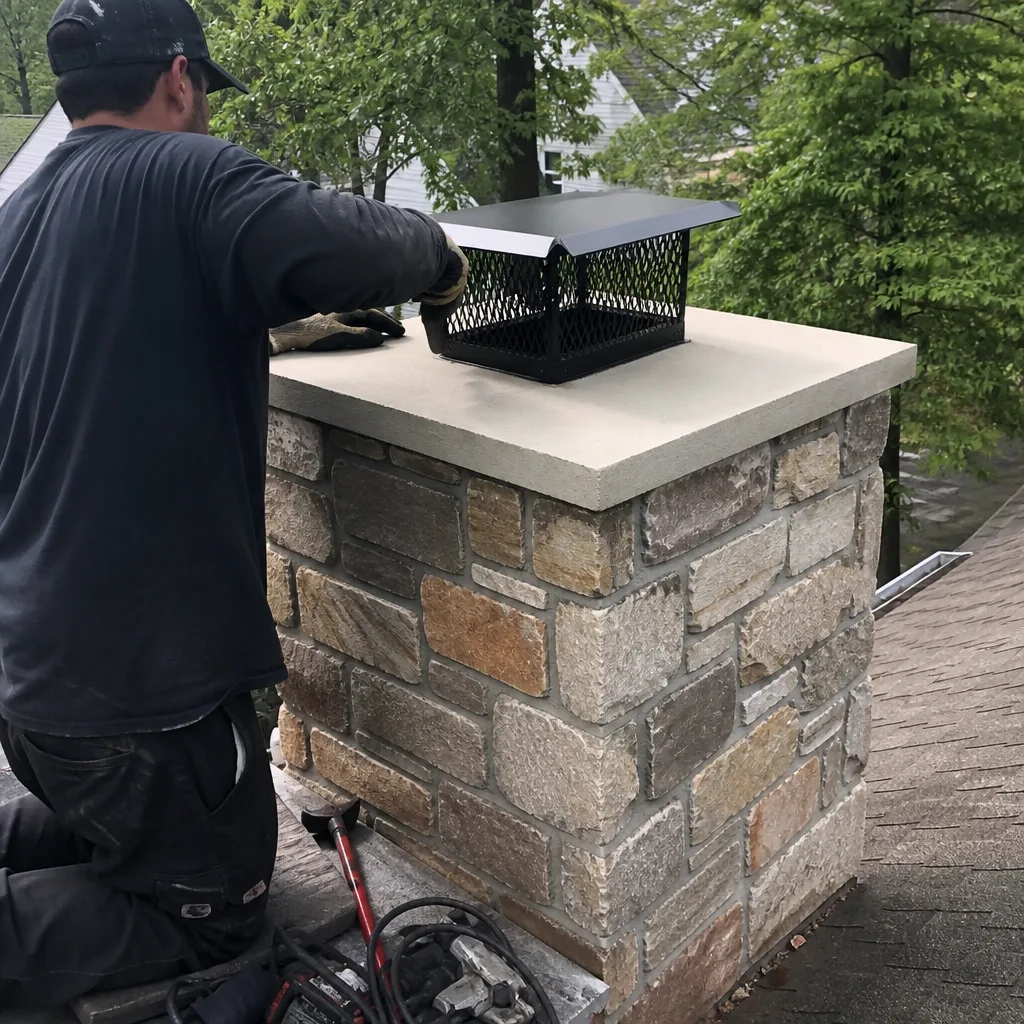
 Caps & crowns
 Masonry repair
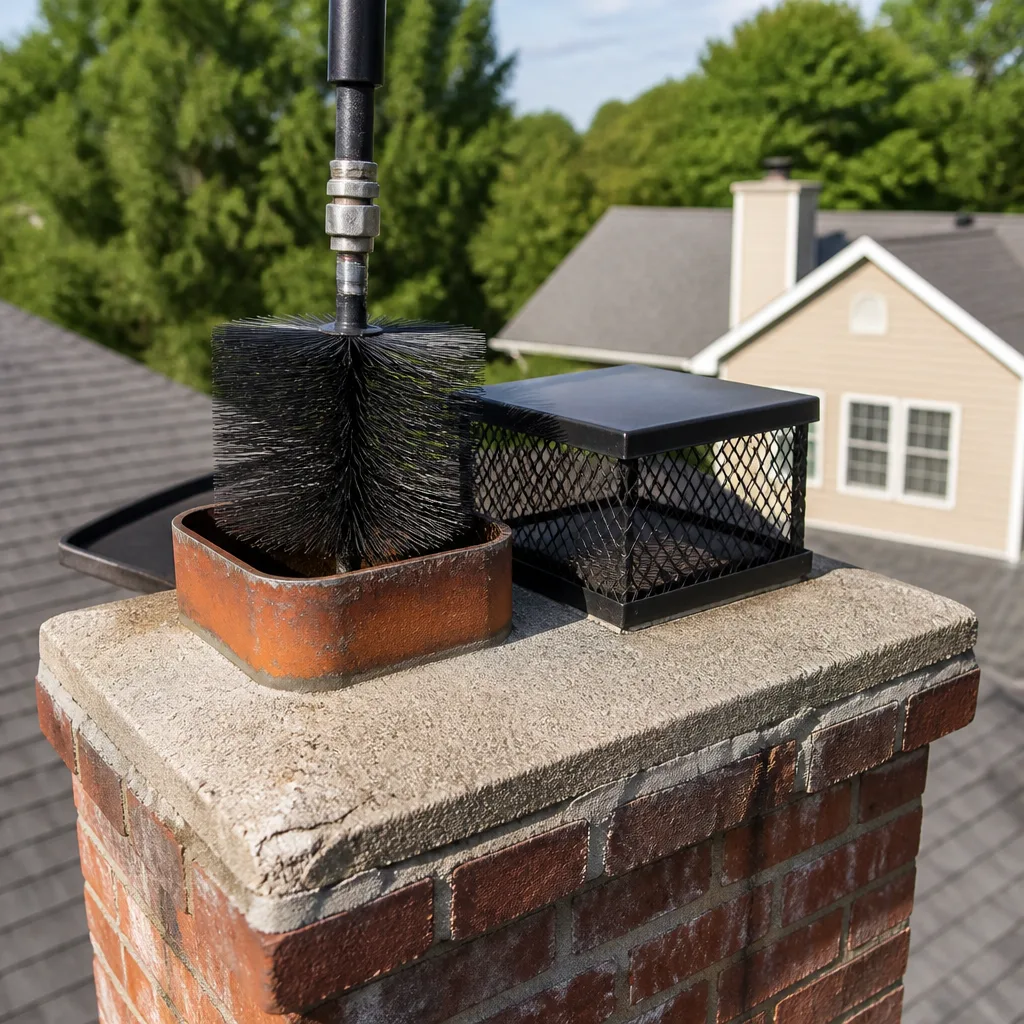
Level 1 sweep and inspection to the NFPA 211 annual standard - flue, crown, cap, and flashing checked and photographed
Chimney sweep logs do not sweep chimneys. They loosen some creosote - which then falls where a brush and vacuum still have to collect it.
Chimney Cleaning Warning Signs: A Yonkers Homeowner’s Reference Guide
A campfire smell in your living room in July, when your fireplace hasn’t been used in months, is not normal and not minor. It means your damper is failing and outside air carrying creosote odors is backdrafting directly into your home. In Yonkers, where summer humidity presses against masonry and winter freezes widen hairline cracks into structural splits, your chimney tells you things long before a problem becomes a five-figure repair. This guide decodes those signals: the sights, smells, sounds, and structural clues that separate routine cleaning from serious trouble, so you know exactly what you’re looking at when you look up. For a deeper dive, see our Complete Guide to Chimney Cleaning in Yonkers.
Styles & brands we work with
Quick Answer
The most reliable chimney warning signs in Yonkers homes are a campfire smell when the fireplace hasn’t been used, white staining (efflorescence) on exterior brick, flaking or spalling brick faces, a damper that’s hard to move or won’t seal, smoke that curls into the room instead of up the flue, and a crackling sound during or after fires that’s louder than normal wood pop. Any one of these means schedule an inspection. Several at once means stop using the fireplace until a professional has looked at it. Not sure what to expect? Our Chimney Sweep Maintenance Checklist for Yonkers Homeowners walks you through the full process.
Table of Contents
- Exterior Warning Signs You Can See From the Ground
- Interior Warning Signs: Odors, Smoke, and Damper Behavior
- Performance Warning Signs: Draft Problems and Fire Behavior
- The Invisible Warning Signs: What a Phone Camera Can Show You
- How Yonkers Homes Hide Chimney Problems
- What to Photograph When You Spot a Warning Sign
- Schedule Soon or Stop Today: A Triage Guide
- Common Mistakes to Avoid
- When to Call a Professional
- Frequently Asked Questions
- The Bottom Line
Exterior Warning Signs You Can See From the Ground
Most Yonkers homeowners never climb onto their roof, and you don’t need to. A surprising number of chimney problems announce themselves from street level, driveway level, or a second-floor window. The trick is knowing which visual cues matter and which are just old-house character.
Spalling Brick and Flaking Masonry
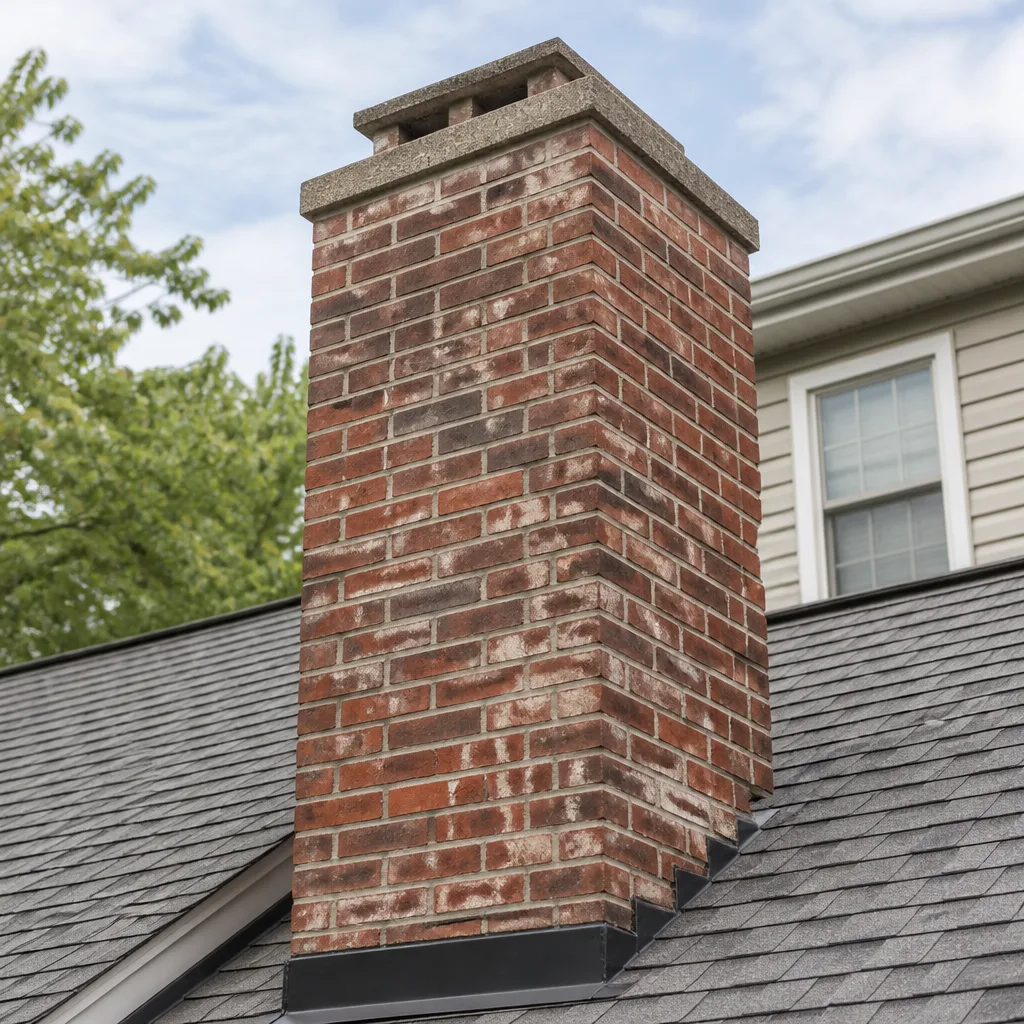
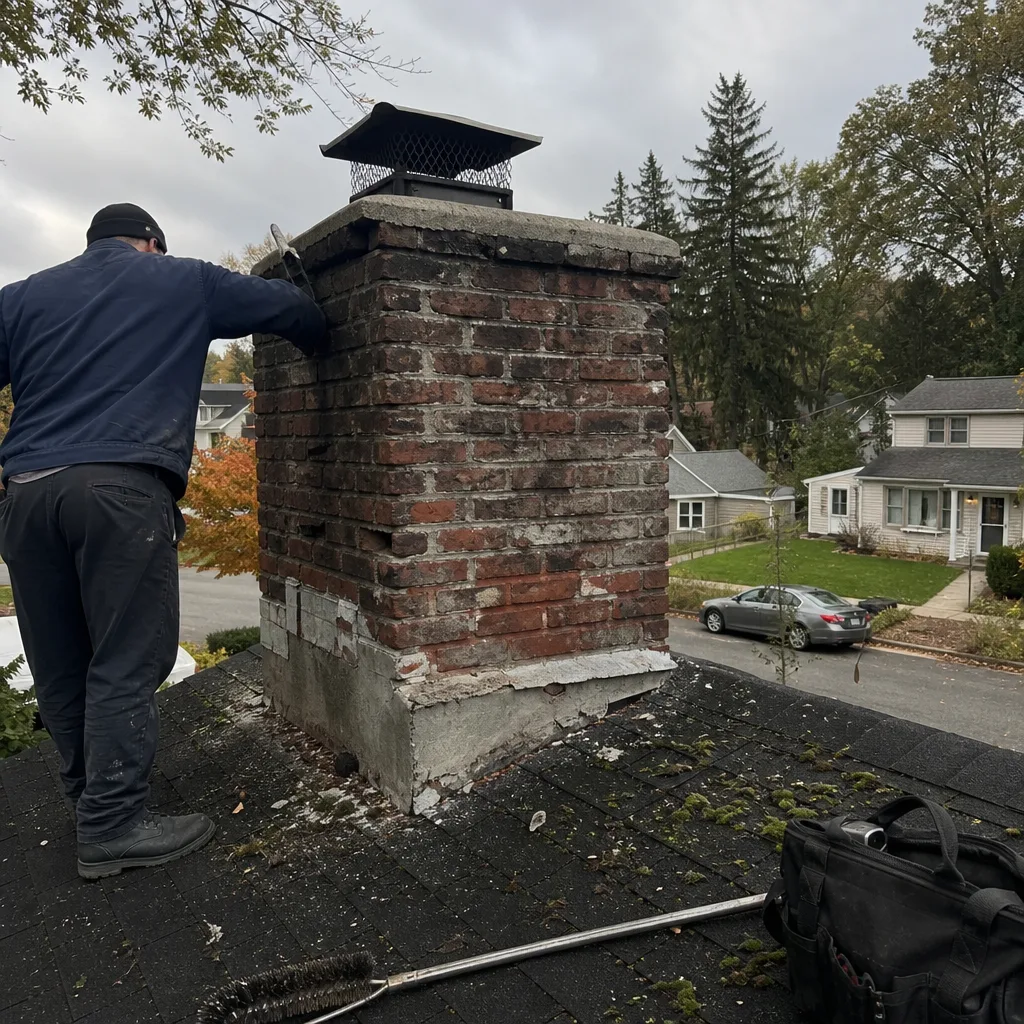
Spalling is the trade term for brick faces that flake, crumble, or pop off in thin layers. In Yonkers, where freeze-thaw cycles hit hard from November through March, spalling is one of the most common exterior chimney issues we see. Water gets absorbed into the brick’s pores, freezes, expands, and literally breaks the brick from the inside out. You’ll notice thin, flat pieces of brick on the ground near the chimney base, or brick faces that look concave, pitted, or scoured compared to surrounding brick.
This is a schedule-soon sign, not a panic sign, unless the spalling is extensive. One or two affected bricks means water is getting in somewhere. A whole chimney face of crumbling brick means the structural integrity of the chimney is compromised, and that’s a stop-using-it situation until a professional assesses the damage.
White Staining (Efflorescence)
Efflorescence is a white, chalky, sometimes crystalline deposit that appears on masonry. It’s caused by water moving through the brick, carrying dissolved salts to the surface, and leaving those salts behind when the water evaporates. Homeowners often mistake it for paint overspray, mildew, or just “old brick doing old brick things.”
Efflorescence itself is cosmetic. What it signals is not. White staining tells you that water is traveling through your chimney masonry, which means your brick is acting like a sponge. That moisture is slowly dissolving the mortar joints from the inside, weakening the structure, and creating the conditions for spalling to begin. In Yonkers, where rain and snow are regular visitors and older brick homes predate modern water-repellent treatments, efflorescence is worth a professional look, not a shrug.
Cracked or Damaged Chimney Crown
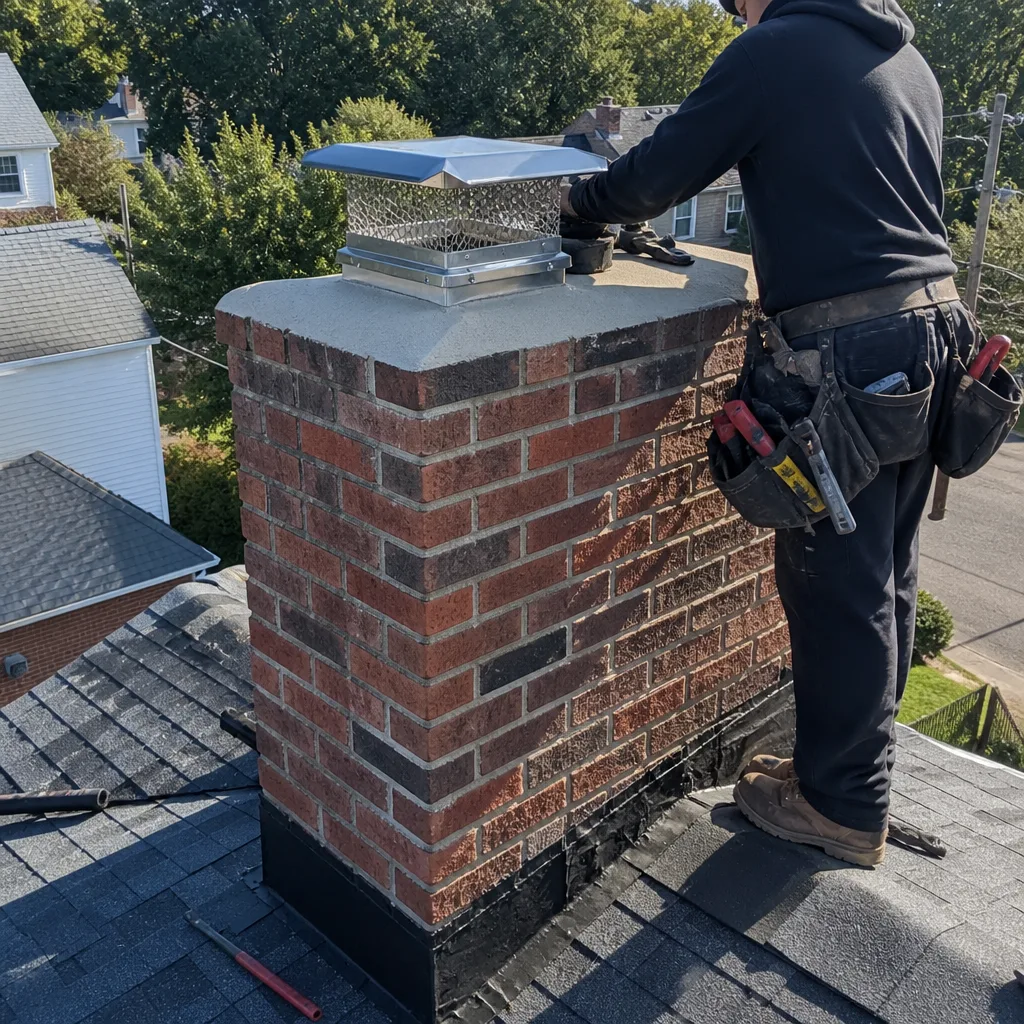
The crown is the concrete or mortar slab that caps the top of the chimney, sealing the gap between the flue liner and the outer brick. Think of it as the chimney’s roof. When the crown cracks, water doesn’t just sit on top of the chimney, it pours directly into the space between the flue and the masonry, where it attacks mortar joints, rusts the damper assembly, and deteriorates the liner.
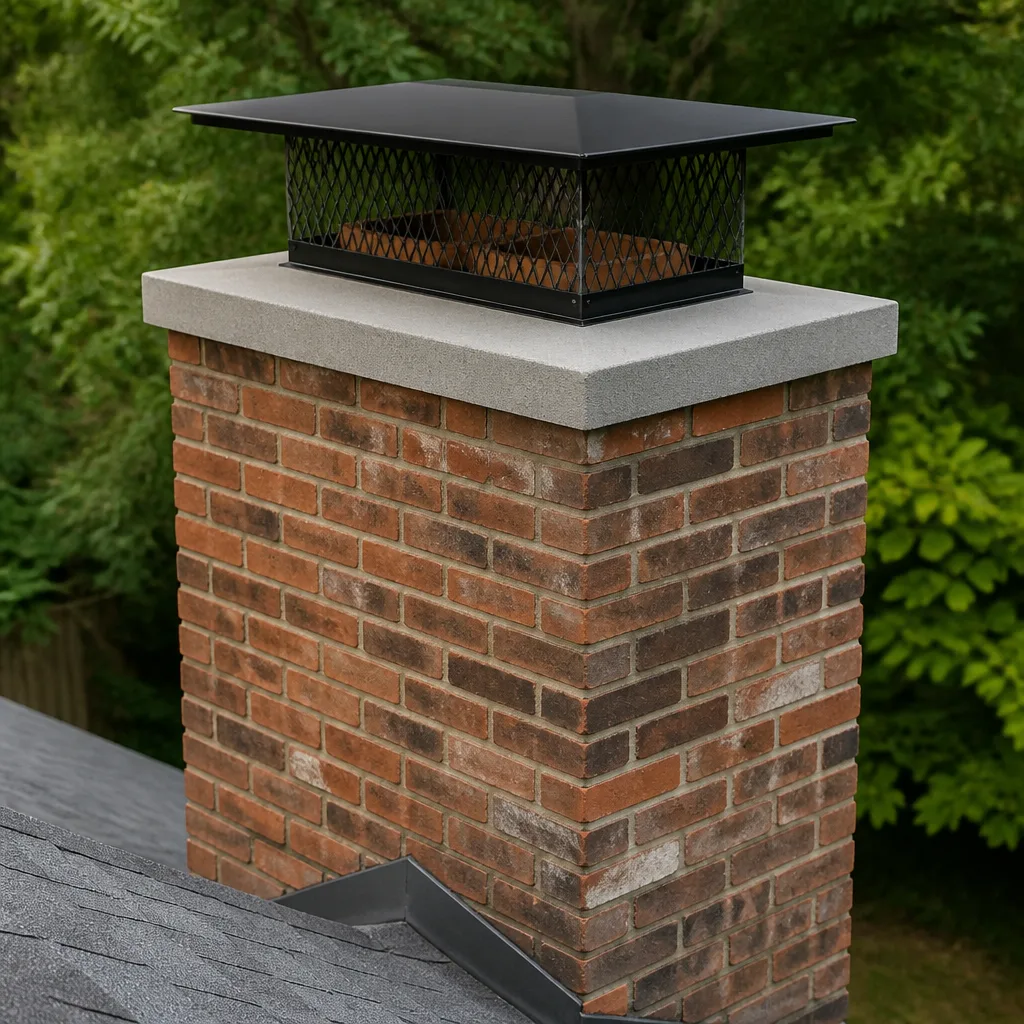
A good crown should overhang the brick by a couple of inches, shedding water away from the chimney body. Many older Yonkers chimneys have crowns that are flush with the brick or even sloped inward, which is a design flaw that accelerates water damage. From the ground, look for visibly cracked, raised, or missing sections at the top of the chimney. If you see vegetation growing out of the crown, that’s a particularly clear sign that water and organic material have established a foothold.
Leaning or Separating Chimney
This one is rare but serious. If your chimney appears to be tilting, or if there’s a visible gap between the chimney and the house where they meet, that’s a stop-using-it-today situation. A leaning chimney means the foundation or support structure has failed, the masonry has separated from the home’s framing, or the flashing and firestopping have been compromised. In older Yonkers homes with stone foundations, chimney settlement is not unheard of. Any visible lean, even a slight one, warrants an immediate professional assessment.
Interior Warning Signs: Odors, Smoke, and Damper Behavior
Inside the house is where chimney problems get personal. The exterior signs are about the chimney’s health. The interior signs are about your family’s health and safety, because they often involve air quality and fire risk.
The Summer Campfire Smell
This is the one that trips people up. You haven’t had a fire since February. It’s July. The air conditioning is running, the windows are open, and suddenly the living room smells like a campsite. Where is that coming from?
The answer is backdrafting. When outside air is warmer and more humid than the air inside the chimney, the normal upward draft reverses. Air flows down the chimney, picks up creosote odors (the flammable tar residue from wood fires), and pushes them through a damper that isn’t sealing properly, right into your living space. The smell itself is unpleasant. What it tells you is more concerning: your damper isn’t doing its job as a barrier, and if smoke can travel down, so can carbon monoxide from any attached appliance.
This is a schedule-a-sweep sign. A thorough cleaning plus a damper inspection usually resolves it. If the smell comes with visible soot, black dust, or moisture around the firebox, escalate that to a call-this-week priority.
Smoke Curling Into the Room
When you light a fire and smoke doesn’t go up the chimney, it’s not being shy. It’s telling you the flue is obstructed, the damper isn’t fully open, or the draft is too weak to pull combustion gases out of the house. Common culprits: creosote buildup narrowing the flue passage, a bird’s nest or animal nest blocking the flue, a too-small or improperly sized liner, or negative air pressure inside the home competing with the chimney for air.
Occam’s razor applies here for Yonkers homeowners: the most common cause is creosote buildup. Over a full season of fires, creosote accumulates on the flue walls, and if the flue isn’t swept annually, that accumulation can reduce the opening by half or more in a busy fireplace. The second most common cause we encounter is a damper that’s partially seized in the wrong position, especially in older homes where the damper hardware hasn’t been replaced in decades.
Black, Crusty, or Shiny Buildup Inside the Firebox
Take a flashlight and look at the walls of your firebox, the area right above where the logs sit. You’re looking at creosote. Some creosote is normal after any wood fire. The question is how much and what kind.
Creosote comes in three stages, and the trade describes them by consistency: Stage 1 is flaky and dusty, easy to brush away. Stage 2 is crunchy, tar-like, and requires mechanical scraping. Stage 3 is the dangerous one: a hardened, glossy, tar-glazed coating that looks almost like black glass. Stage 3 creosote is highly concentrated fuel. It’s the stuff that turns a small chimney fire into a structure fire, because it burns at extremely high temperatures and is very difficult to extinguish once ignited.
If you can see buildup thicker than about an eighth of an inch, or anything shiny and tar-like, that’s a get-it-swept signal. In our experience as a Chimney Sweep in Yonkers, Stage 3 creosote accounts for the majority of urgent callouts we field between November and January, when Yonkers homeowners fire up their fireplaces for the first time after months of disuse.
A Damper That’s Hard to Move or Won’t Close Fully
The damper is the metal plate inside the throat of the chimney that opens to let smoke out and closes to keep outside air from coming in. It’s one of the few mechanical components in a masonry chimney, and like any mechanical component, it wears out. Yonkers humidity accelerates rust, especially in older dampers made from thinner steel. You’ll feel it when you try to open or close the damper: resistance, grinding, a damper that slips out of its track, or one that simply won’t seal fully even when closed.
A damper that won’t close is a year-round problem. In winter, it lets heated house air escape up the flue 24 hours a day, quietly adding to your heating bill. In summer, it lets humid outside air in, which can cause that campfire smell and can also contribute to moisture problems in the firebox. A damper that fails in the open position also removes your only barrier against animal entry.
Performance Warning Signs: Draft Problems and Fire Behavior
This is the category that’s easiest to misread, because fireplaces are supposed to crackle, pop, and behave a little unpredictably. That’s part of the charm. But certain behaviors are not charm, they’re diagnostic data.
A Fire That Won’t Draw, Even After the Chimney Warms Up
Every chimney takes a few minutes to establish a draft. Cold air in the flue is heavier than warm air, so until the flue warms, smoke may wander a bit. That’s normal. What’s not normal is a fireplace that won’t draw even after 15 or 20 minutes of burning, a fire that smokes constantly, or one that seems to burn sluggishly regardless of how dry your wood is or how much kindling you use.
Poor draft is a symptom, not a diagnosis. The underlying causes can include: a flue that’s too large or too small for the fireplace opening, a chimney that’s too short relative to the roof peak, surrounding trees or buildings creating wind turbulence (common in some of Yonkers’ denser, older neighborhoods), a partially blocked flue, or an unlined flue with rough masonry walls that disrupts airflow. The fix depends on the cause, which is exactly why a visual-only answer won’t cut it. This is a diagnostic that often requires a camera inspection from the top down or the firebox up.
Unusually Loud Crackling or Popping
Wood fires crackle. That’s the moisture in the wood flashing to steam and the cellular structure of the logs breaking apart. What you’re listening for is a crackle that’s too loud, too sharp, or too rhythmic, almost like the sound of a campfire that’s gotten out of hand. That sound, especially when paired with a rushing or roaring noise in the flue, is the sound of creosote igniting.
A chimney fire doesn’t always look like a cartoon fireball shooting out the top. Many chimney fires are slow-burning and contained within the flue, sounding like a freight train, a roar, or a rapid series of pops that don’t match the fire in the firebox. If you hear this sound, close the damper if you can do so safely, call the fire department if you see flames exiting the top of the chimney, and do not use the fireplace again until it’s been inspected and swept.
A Fire That’s Hard to Light or Won’t Stay Lit
When a fire needs constant tending, smokes, or dies repeatedly even with good fuel, the problem is often airflow. A chimney works because of the stack effect: warm air rises, drawing oxygen into the fire and pulling exhaust out. When the damper doesn’t open fully, the flue is partially blocked, or the home is too airtight (common in newer Yonkers construction or recently weather-sealed older homes), that airflow gets strangled. The result is a fire that behaves like it’s suffocating, because it is.
This is also a sign that’s easy to attribute to “bad wood” or “bad weather.” But when the same wood burns fine one day and poorly the next, climate isn’t your culprit. Airflow is. The fix often involves a damper repair, a flue cleaning, or the addition of a fresh-air intake to compensate for the home’s tight envelope.
The Invisible Warning Signs: What a Phone Camera Can Show You
Not every warning sign is visible from your couch or your driveway. Some of the most important ones are tucked up inside the chimney, in places you can’t see without a ladder, a mirror, or a camera. Fortunately, you carry a camera every day.
The Selfie-Mode Damper Check
Here’s a trick that costs you nothing and takes two minutes. Open your damper fully. Set your phone’s camera to selfie mode, turn on the flash, and hold it up inside the firebox, pointing up toward the damper and the smoke shelf, the flat area just above the damper where the flue makes its turn. Take a photo. Now close the damper and take another photo from the same position, looking at whether the damper plate fully seals against its frame.
What you’re looking for: a damper that’s visibly rusted, warped, or caked with creosote. A damper that doesn’t fully close when “closed,” showing a ring of daylight around the edges. Cracks or gaps in the smoke shelf, which is a common spot for water damage and missing mortar. A flue opening that looks significantly narrowed by black buildup. Any of these is worth a professional look.
What a Mirror and a Flashlight Can Confirm
If you don’t want to maneuver a phone, a simple mechanic’s mirror and a bright flashlight work too. Shine the light, angle the mirror, and look up. What you’re checking for is straightforward: is the flue opening roughly the size you’d expect, or is it choked down by black material? Is there visible dripping, staining, or moisture anywhere? Is the mortar between the flue tiles intact, or can you see gaps, missing pieces, or a flue that looks “moved” or offset?
None of this replaces a camera inspection, by the way. A pro-grade camera can navigate the bends in a flue, document exactly what it sees, and give you photo evidence of whatever the tech reports. But for a homeowner’s first-pass triage, your phone or a mirror tells you whether you’re looking at a minor concern or a clear problem.
How Yonkers Homes Hide Chimney Problems
Yonkers is not a uniform housing market, and chimney problems take different shapes depending on the era and style of the home. Understanding the local landscape helps you read your own warning signs more accurately.
Oil-to-Gas Conversions and Converted Flues
A huge number of Yonkers homes built before 1960 originally burned oil for heat and used the masonry chimney to vent the oil burner’s exhaust. When those homes converted to natural gas, the flue often stayed the same. The problem is that gas burns cleaner but also cooler than oil, and the water vapor in gas exhaust doesn’t exit as readily through an oversized masonry flue. The result: condensation inside the flue, which accelerates liner deterioration, creates visible moisture staining, and produces a distinctively sour or chemical odor that homeowners sometimes mistake for mildew or sewage gas.
If your home has a converted heating system and your chimney shows dark staining, flaking, or a persistent smell near the fireplace that isn’t wood smoke, that’s a specific warning sign for liner deterioration. The fix is usually a properly sized liner, often a trade-trusted system like a DuraFlex flexible liner, which is designed for exactly this kind of retrofit.
Older Brick Construction and Freeze-Thaw Stress
Yonkers winters are hard on masonry, and the brick used in many of the city’s older homes was fired at lower temperatures than modern brick, making it more porous. Every freeze-thaw cycle works on that brick like a jackhammer, and over 60, 80, or 100 years, that accumulated stress shows up as spalling, cracked mortar joints, and a chimney that’s slowly losing its ability to shed water. If your home is pre-1940 brick, you should be especially attentive to efflorescence and flaking, because those are early indicators that the masonry is reaching the end of its water resistance.
Tree Cover and Wildlife Pressure
Several Yonkers neighborhoods have mature tree canopies that press close to rooflines. Trees mean squirrels, raccoons, and birds, and chimneys without proper caps are prime real estate. A chimney cap is the metal or masonry cap that sits above the flue opening, keeping rain and animals out while letting smoke exit. If you hear scratching, chattering, or fluttering from inside the chimney at any time of year, that’s a warning sign. Animals build nests, animals die in chimneys, and animals create blockages. The sound is the warning. The cap is the fix, usually a quality product from a brand like Copperfield or Gelco.
What to Photograph When You Spot a Warning Sign
This is where the modern homeowner has a real advantage. Ten years ago, if you noticed something wrong with your chimney, you’d call a tech, describe it from memory, and hope they believed you. Now you can photograph, document, and get triaged by phone, often before anyone rolls a truck. Here’s your documentation checklist:
- Exterior shots from at least two angles. Wide shot of the chimney from the ground, enough to see its full height and its relationship to the roofline. Then a closer shot of whatever specific concern caught your eye: staining, cracks, spalling, the crown.
- The damper, photographed open and closed. Using the selfie-mode technique described above. These photos tell a tech more than a verbal description ever could, because they show the actual condition of the metal, the seal, and the surrounding masonry.
- The firebox walls. Straight-on shot with flash from about a foot back. This documents creosote condition and any firebrick cracking.
- Any moisture evidence. Water stains on the ceiling near the chimney, dampness in the firebox after rain, bubbling paint on the wall behind the hearth. Water intrusion is a diagnosis in progress, and photos establish the pattern.
- Your heating system’s chimney connection, if applicable. If your boiler or furnace vents into the same chimney, photograph the connection point and any visible pipe condition. This is especially important for those converted-flue homes.
Having this photo set ready before you call means a tech can look at the images, make an initial assessment, and arrive prepared with the right tools. It also creates a visual baseline, so you know whether a condition is stable or progressing over time. At Hadley Chimney Yonkers, this is exactly how our intake works. You describe what you’re seeing and share the photos, and we can often triage the severity before the visit, part of the transparency that comes with The Relay Visibility Guarantee.
Schedule Soon vs. Stop Today: A Triage Guide
One of the hardest things for a homeowner to judge is urgency. Is this a “I’ll get to it before winter” situation or a “lights out, firebox closed, call someone” situation? Here’s the honest breakdown.
Schedule a Sweep or Inspection This Month
- Campfire smell in the house when the fireplace hasn’t been used recently.
- White efflorescence staining on exterior brick.
- Mild to moderate spalling on a few bricks.
- Creosote buildup you can see but that’s flaky, not glossy.
- A damper that’s stiff, noisy, or doesn’t seal 100%.
- Animal sounds coming from the chimney.
- Small cracks in the chimney crown.
- Any of these signs combined with it being more than a year since your last cleaning.
Stop Using the Fireplace and Address Immediately
- Smoke consistently backing up into the house when the damper is open.
- A loud rushing or roaring sound from the chimney during a fire.
- Glassy, tar-like creosote visible inside the flue or firebox.
- A visible gap between the chimney and the house, or a leaning chimney.
- Water actively dripping into the firebox during rain.
- The smell of gas or exhaust fumes in the house when the heating system runs.
- Extensive spalling that suggests structural compromise.
For anything in the second list, close the damper, don’t light any more fires, and get a professional assessment before using the chimney again. These are not repair-tomorrow issues. They are repair-before-use issues.
For the full scope of what a professional inspection and cleaning entails, start with our detailed guide on Chimney Sweep in Yonkers to understand what happens during a sweep and what a technician should be checking.
Common Mistakes to Avoid
- Assuming no fires means no problems. A chimney that sits unused all year is not a chimney that’s problem-free. Moisture intrusion, animal entry, and damper deterioration all happen whether you burn or not. Annual inspection is still warranted.
- Using the “I’ll smell it if there’s a problem” test. Many serious chimney issues are entirely odorless until they’re advanced. Creosote buildup in a flue you can’t see doesn’t announce itself until it ignites or blocks the draft.
- Burning pine or unseasoned wood to save money. Pine and other softwoods create more creosote per fire than hardwoods. Wet wood creates dramatically more. The slight savings on firewood disappears the first time you need a heavy-duty creosote removal.
- Ignoring a smoky fireplace because “it’s always done that.” A fireplace that has always smoked has always had a problem. It’s not a personality trait, it’s an airflow or liner sizing issue that’s been deferred.
- Closing the damper immediately after the fire dies. Let the fire burn to cold ashes and the flue temperature drop before closing the damper. Closing too early traps combustion gases and moisture in the flue, accelerating creosote accumulation.
- Treating the chimney as disconnected from the heating system. In homes where the furnace or boiler shares the chimney, a liner or draft problem affects both. A chimney problem is a whole-house problem in these configurations.
- Relying on a “chimney log” as a substitute for a sweep. Chimney cleaning logs can reduce some Stage 1 creosote. They do not remove staged, hardened creosote, they don’t inspect the flue, and they don’t catch liner damage. A log is not a cleaning and not an inspection.
When to Call a Professional
You’ve spotted a warning sign, documented it, and triaged it against the lists above. Now what? Call when you see any sign in the “stop using” category, any combination of signs in the “schedule soon” category, or when it’s simply been more than a year since your last inspection and you plan to use the fireplace this season. A professional sweep in Yonkers typically includes a full inspection, a cleaning, a written report of what was found, and photo documentation of the condition before and after. If you’re seeing signs that suggest repair work beyond cleaning, such as liner damage, crown cracks, or masonry issues, a Chimney Repair in Yonkers specialist can assess scope and give you a written price before any work begins. Hadley Chimney Yonkers offers free estimates in Yonkers with a live person answering calls 24/7. Call (914) 233-3156 to describe what you’re seeing and get a straight answer about next steps.
Frequently Asked Questions
Your chimney needs cleaning if you see creosote buildup thicker than about 1/8 inch inside the firebox or flue, if your fireplace has burned more than one cord of wood since the last sweep, if you smell campfire odors when the fireplace isn’t in use, or if it’s been over a year since the last professional cleaning. The National Fire Protection Association recommends annual inspection regardless of visible signs, and in Yonkers, where both wood fireplaces and converted heating flues are common, a yearly check is the safest habit. Call (914) 233-3156 to book a sweep and get a written price before any work starts.
A chimney fire typically sounds like a freight train, a jet engine, or a deep roar coming from inside the chimney, often accompanied by unusually loud crackling or popping that doesn’t match the fire in the firebox. You may also see dense smoke, embers exiting the top of the chimney, or flames above the roofline. If you suspect a chimney fire, close the damper if it’s safe to do so, evacuate if flames are visible, and call 911. Afterward, the chimney must be professionally inspected before any further use.
A smoke or campfire smell with no active fire is caused by air backdrafting down the chimney, through a damper that isn’t sealing, and into your home. That air carries creosote odors from inside the flue. In Yonkers, this is most common in summer when warm outside air reverses the chimney’s normal draft. A sweep and damper inspection usually resolve it, and if the smell is accompanied by exhaust-like odors when your heating system runs, that’s a separate carbon monoxide concern that needs immediate attention.
Chimneys should be swept at least once per year if you burn wood regularly, and inspected annually whether you burn or not. Homes in Yonkers with converted heating flues should also have the liner inspected annually, because gas exhaust condensation deteriorates liners faster than wood smoke alone. Heavier use, softwood burning, or visible creosote accumulation may warrant more frequent sweeping. The goal is to keep creosote below the threshold where it becomes a fire hazard.
Yes. You can check the exterior from the ground with binoculars or a zoom lens, look for visible staining, spalling, or crown cracks from a second-floor window, and inspect the firebox, damper, and lower flue from inside using a flashlight and a mirror or your phone’s selfie camera. What you can’t see from inside is the upper two-thirds of the flue, the flue liner condition, and the chimney cap, which is why even diligent homeowners benefit from an annual professional inspection. For an honest assessment of what you’re seeing, call (914) 233-3156 and describe what you’ve documented.
Yes, but for different reasons than wood fireplaces. Gas fireplaces don’t create creosote, but their flues still accumulate dust, debris, and evidence of liner issues, and the log set, burner, and venting components need periodic inspection to catch gas leaks, carbon monoxide issues, and component wear. This is especially relevant in Yonkers homes with converted heating flues. If you have a gas fireplace showing sooty glass, orange flames instead of blue, or smells when running, a Gas Fireplace Repair in Yonkers specialist can diagnose it. Call (914) 233-3156 for a free estimate.
The Bottom Line
Your chimney warns you. The campfire smell in July, the white staining on brick, the damper that grinds, the fire that won’t draw. These are not mysteries and they’re not quirks. They’re diagnostic signals, and once you know how to read them, you can move from anxious homeowner to informed customer. The goal isn’t to turn every homeowner into a chimney tech. It’s to give you enough literacy to know when something’s wrong, enough documentation to show a professional, and enough confidence to act before a warning becomes an emergency. In Yonkers, with our freeze-thaw winters, our converted flues, and our century-old brick, that literacy pays off every single year. For a deeper look at what a professional inspection actually covers, and how our process works from booking to photos to written report, start with Hadley Chimney Yonkers home.
Written by Cory Mitchell, Owner at Hadley Chimney Yonkers, serving Yonkers since 2003.
See the difference
 Before
 After
After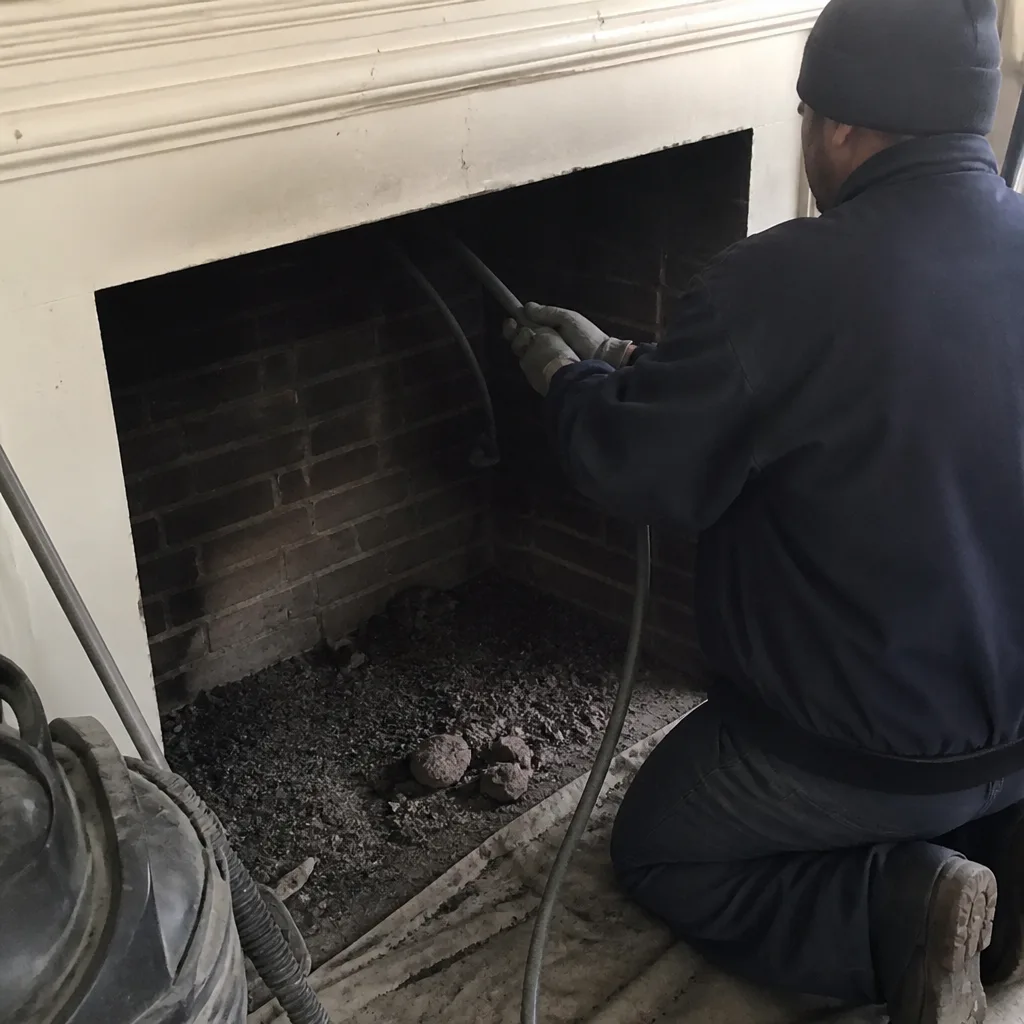 Before
 After
After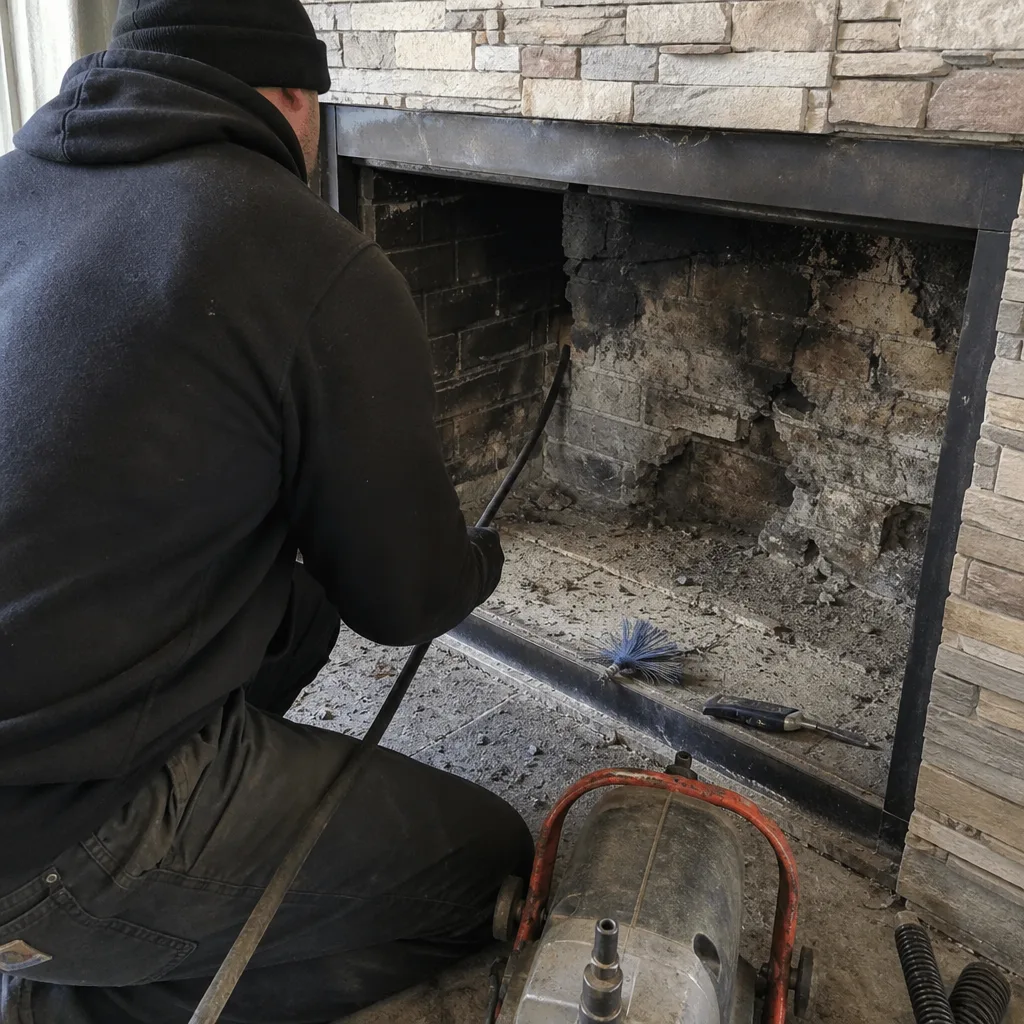 Before
 After
After