
Last updated October 15, 2026
 Sweep & inspection
 Caps & crowns
 Masonry repair
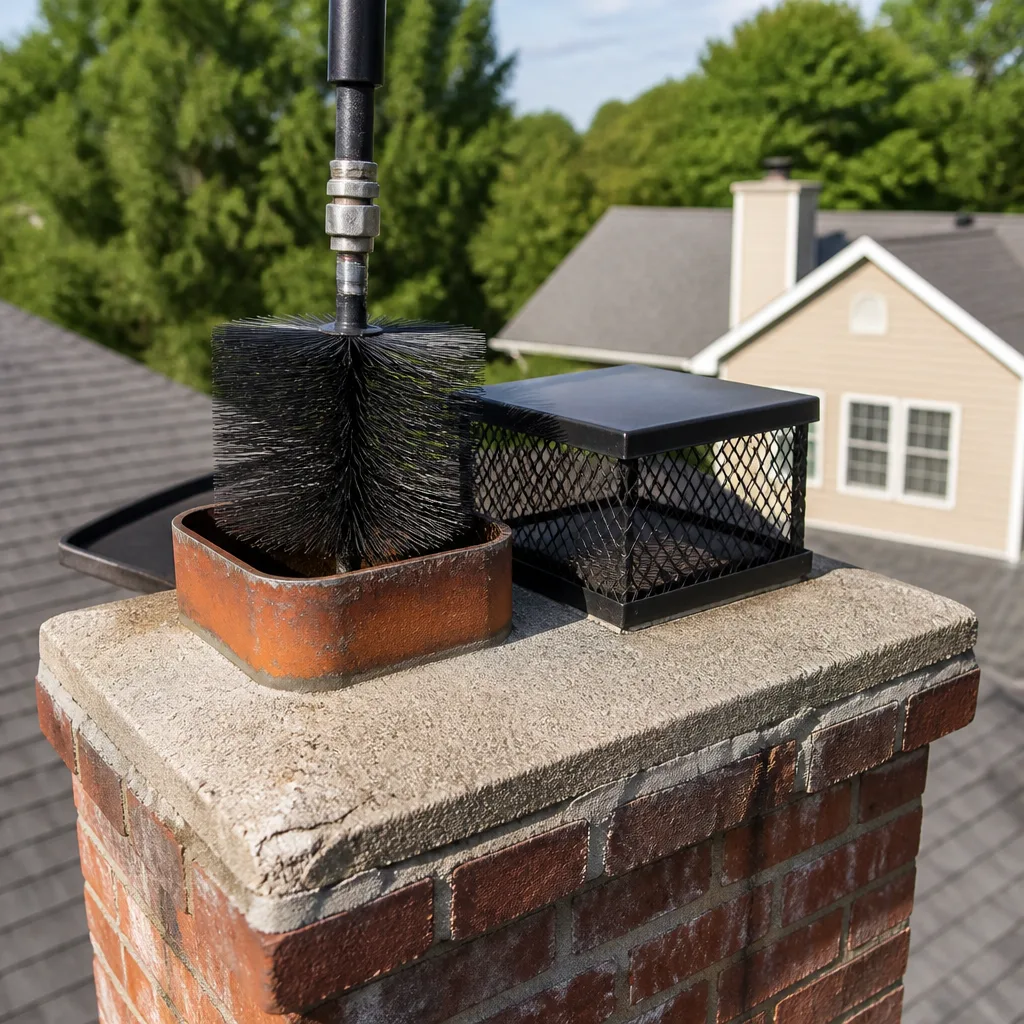
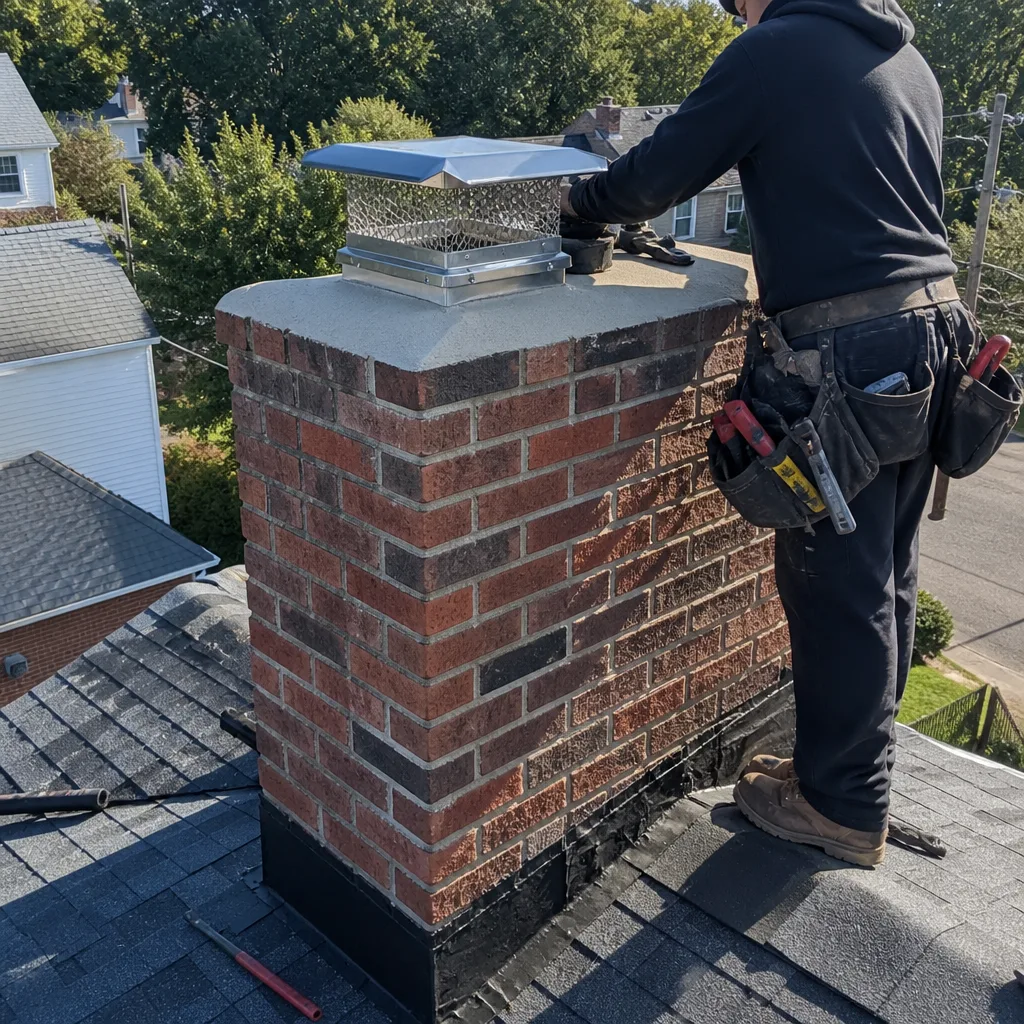
Level 1 sweep and inspection to the NFPA 211 annual standard - flue, crown, cap, and flashing checked and photographed
Chimney sweep logs do not sweep chimneys. They loosen some creosote - which then falls where a brush and vacuum still have to collect it.
Chimney Cleaning Permits, Codes & Inspections in NY: What You Need to Know
Here’s a sentence most Yonkers homeowners never hear until it’s too late: if your chimney tech recommends a new liner insert and pulls no permit for the installation, your homeowner’s insurance policy may legally deny a fire-related claim – even if the liner itself was installed perfectly. The cleaning itself is rarely the regulated part. It’s what the cleaning uncovers that gets people into trouble. This guide draws an honest line between what needs a permit in Yonkers, what doesn’t, and how to protect yourself from the expensive version of “we’ll just skip the paperwork” – for The Complete Guide to Chimney Cleaning in Yonkers and related topics, see our full resource library.
Styles & brands we work with
Quick Answer
A routine chimney cleaning in New York does not require a permit. However, structural repairs – including stainless steel liner installations, firebox rebuilds, and full or partial chimney reconstruction – generally require a building permit from the City of Yonkers, and certain inspections (especially Level 2) are legally mandated after chimney fires, during real estate transactions, or when the home’s heating system changes. The safest approach is to assume any repair beyond a basic sweep or cap replacement needs paperwork.
Table of Contents
- Chimney Cleaning vs. Chimney Repair: Where the Permit Line Actually Sits
- Yonkers Building Permit Rules for Chimney Work
- How NYC’s Influence Shapes Code Expectations in Yonkers and Westchester
- Level 2 Chimney Inspections: When They’re Required and What They Document
- NFPA 211: The Standard Behind New York Chimney Codes
- How to Verify a Contractor Pulled the Right Permit
- The Insurance Angle: How Documented Maintenance Protects a Fire Claim
- Common Mistakes to Avoid
- When to Call a Professional
- Frequently Asked Questions
- The Bottom Line
Chimney Cleaning vs. Chimney Repair: Where the Permit Line Actually Sits
A standard chimney sweep – brushes, rods, a vacuum, and creosote removal (the flammable tar buildup that makes chimneys a fire risk) – is classified as routine maintenance, which is why our Chimney Sweep Maintenance Checklist for Yonkers Homeowners starts here. No municipality in New York requires a permit for it, including Yonkers. You’re not altering the structure. You’re removing combustible material from inside an existing flue. That distinction matters because it’s the basis for everything else in this guide.
Where things change is when a cleaning reveals a problem that requires altering the chimney itself. Here’s a plain breakdown:
- Chimney sweep (no permit): Removing creosote, soot, and debris from the flue. This includes both the standard brush sweep and a rotary cleaning for heavier glaze.
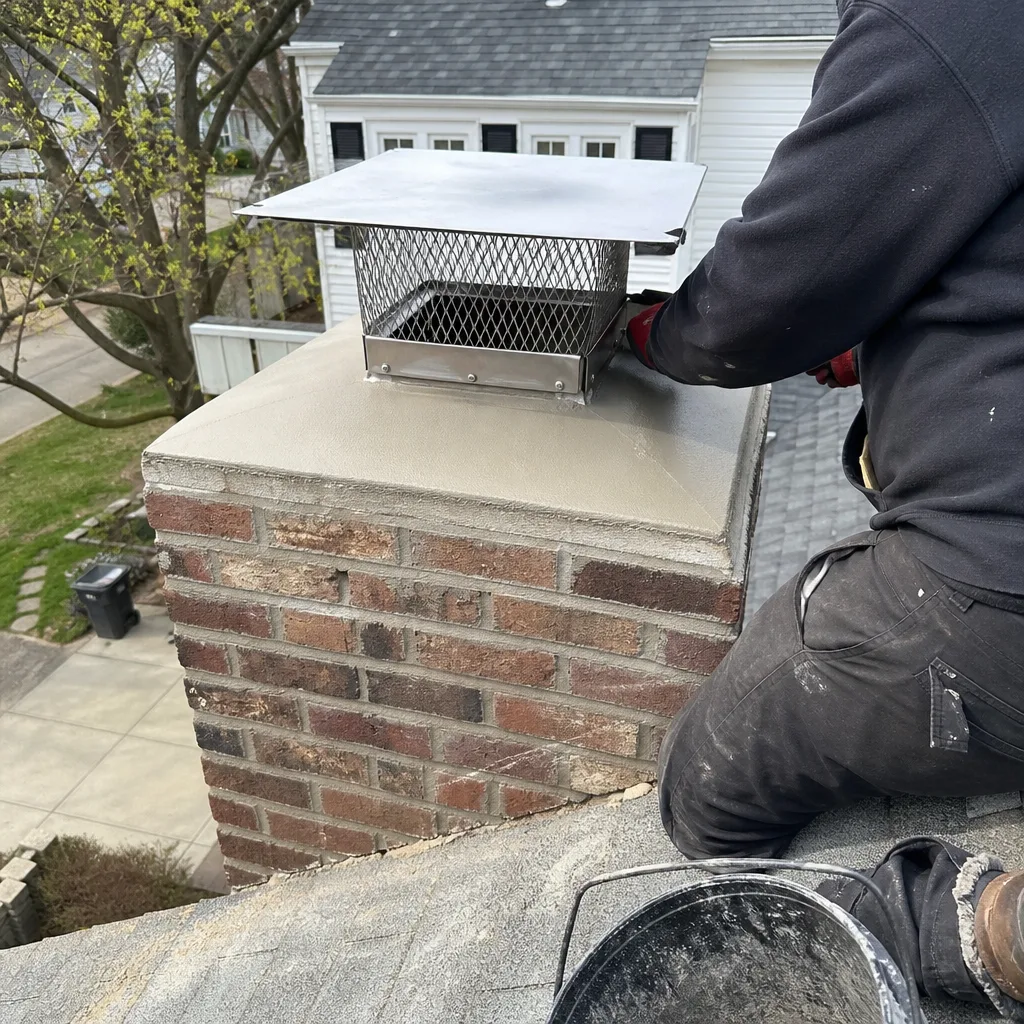
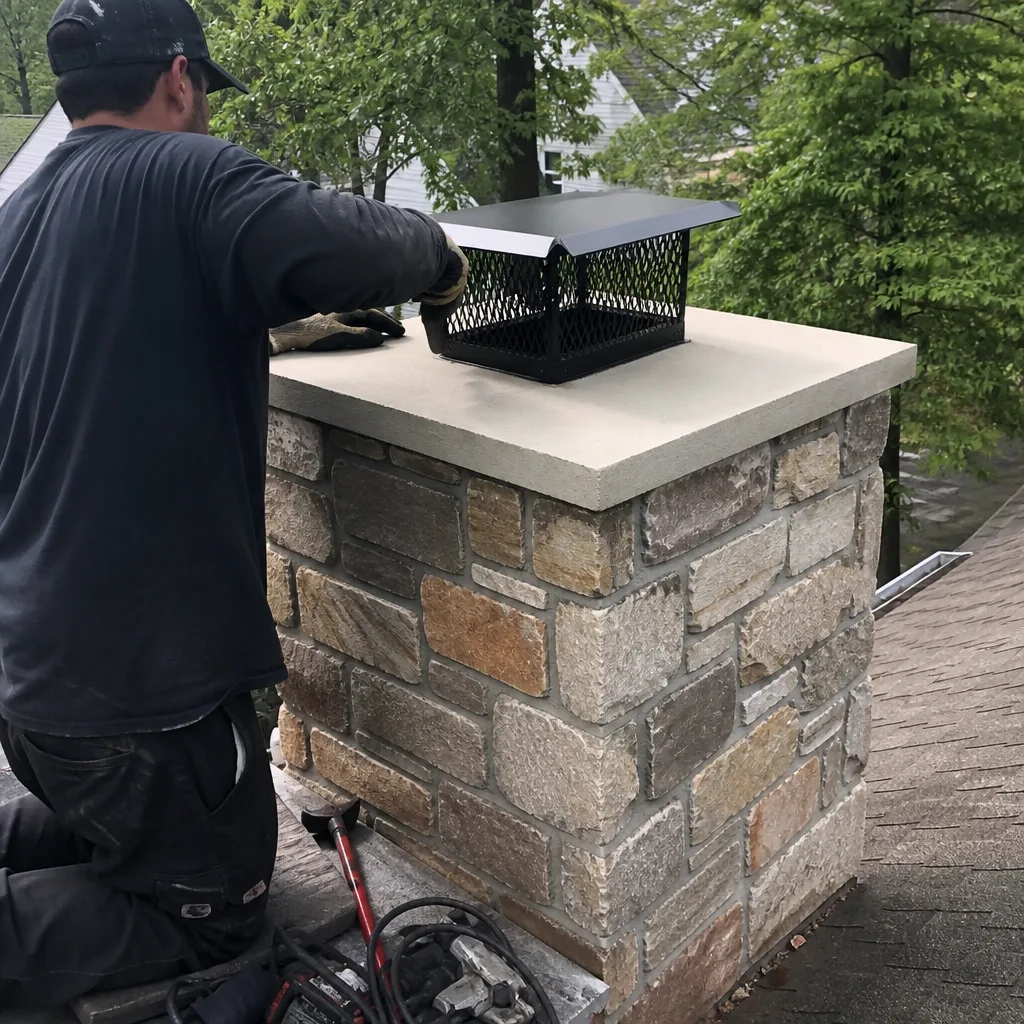
- Chimney cap replacement (usually no permit): Swapping a damaged rain cap for a new one is considered a minor accessory replacement. Some Yonkers inspectors treat a custom-fabricated cap that changes the chimney profile as a repair requiring a permit, but a standard replacement part does not.
- Stainless steel liner installation (permit required): A liner insert changes the flue’s dimensions and material. It alters the chimney’s function and often its clearance-to-combustibles profile. Yonkers treats this as a repair requiring a permit and inspection.
- Firebox rebuild (permit required): Rebuilding the firebox – the chamber where the actual fire burns – involves masonry work that affects structural fire safety. This is never a handshake job.
- Flashing repair (grey area): Replacing damaged flashing where the chimney meets the roof is sometimes classified as roofing work rather than chimney work. Most Yonkers contractors treat a simple flashing repair as maintenance. If roof decking is involved, you’re in roofing permit territory.
- Full or partial chimney rebuild (permit required): If bricks are spalled (flaking and crumbling from moisture damage) to the point that the chimney needs rebuilding above the roofline, that’s a structural alteration. No reputable contractor in Westchester will do this without a permit.
We’ve seen homeowners in Yonkers neighborhoods like Crestwood and Bryn Mawr get genuinely surprised when a $279 sweep quote turns into a $4,000 liner job. The liner isn’t a scare tactic – it’s often legally necessary when the original clay tiles inside the flue are cracked and the chimney can no longer contain sparks. But the permit requirement that comes with that liner job should be discussed openly, not buried. At Chimney Sweep in Yonkers, the permit conversation happens before any work is booked, not after.
Yonkers Building Permit Rules for Chimney Work
Yonkers operates under its own building department, not New York City’s Department of Buildings. The City of Yonkers Building Department generally follows the New York State Uniform Fire Prevention and Building Code, with amendments specific to Westchester County. For chimneys, what this means in practice is that you’ll need a permit for any work that changes the chimney as a structural or fire-safety component.
Here’s what a Yonkers building permit application for chimney work typically requires:
- Permit application form: Filed by the contractor or homeowner with the Yonkers Building Department, identifying the property address and the scope of the chimney work.
- Description of materials: What’s being installed – for example, a DuraFlex stainless steel liner system (a flexible liner brand that chimney pros actually rely on for its durability and code compliance).
- Contractor license verification: Yonkers requires that work be performed by a licensed contractor. The permit is typically issued to the contractor, not the homeowner.
- Inspection scheduling: After the work is complete, the Building Department inspects it before closing the permit. An open permit is a real problem when you go to sell the house.
The filing fees for a chimney repair permit in Yonkers are modest – typically in the $50 to $150 range depending on project valuation – but the consequences of skipping the permit are not. An unpermitted liner installation can come back as a red flag on a home inspection report during a sale. In Yonkers, where housing stock skews older (much of the inventory was built between 1900 and 1960), buyers are already cautious about older chimneys. An unpermitted repair reads as a liability, and sellers often have to either pull the permit retroactively or drop the price.
For a new home build or a major addition in Yonkers, the chimney is covered under the umbrella permit for the structure. It’s the repair-side permits that catch people by surprise, because homeowners assume maintenance and repair are the same thing. They’re not. Chimney Repair in Yonkers work that changes the flue or firebox is a different regulatory category than a sweep.
How NYC’s Influence Shapes Code Expectations in Yonkers and Westchester
Yonkers sits right on the Bronx border, and that proximity affects chimney code expectations in ways that aren’t immediately obvious. New York City has some of the strictest chimney inspection requirements in the country, driven by the density of attached housing and the city’s aggressive fire-safety enforcement. Yonkers doesn’t operate under NYC’s rules, but Westchester inspectors are aware of them, and some local code expectations have drifted in NYC’s direction.
Key differences to understand:
- NYC requires periodic boiler inspections for many residential buildings, including chimney conditions. Yonkers does not impose the same periodic boiler-to-chimney inspection mandate on single-family homes, but any Yonkers home that shares a party wall with an attached neighbor (common in areas like Park Hill and southwest Yonkers) may face additional inspection scrutiny after a fire or carbon monoxide event.
- NYC has a dedicated chimney inspection law for rental properties. Yonkers has fewer rental-specific chimney statutes. The responsibility falls more directly on the owner, guided by the general duty to maintain a safe dwelling.
- Clearance rules are the same in spirit. Both NYC and Westchester County fire codes draw from NFPA standards, which require a specific clearance between a chimney and combustible materials like roof framing. The exact number varies with the chimney type, but the principle is uniform: an unlined or improperly lined chimney that sits closer than clearance allows is a code violation in any jurisdiction in New York.
What has changed in Westchester over the last decade is documentation. Inspectors in Yonkers increasingly expect photo documentation of liner installations, not just a verbal confirmation that the work was done. That’s why we photograph every repair at Hadley Chimney Yonkers and provide those photos to the customer. It’s not for marketing – it’s because when an insurance adjuster or home inspector asks to see the inside of the flue, you have something to show.
Level 2 Chimney Inspections: When They’re Required and What They Document
A Level 2 chimney inspection is a specific, defined inspection tier in the National Fire Protection Association’s NFPA 211 standard. It includes everything in a Level 1 inspection (the visual check done during a standard sweep) plus video scanning of the entire flue interior, inspection of accessible attics and crawl spaces where the chimney passes through, and documentation of any suspected damage.
Under NFPA 211, a Level 2 inspection is required in these situations:
- After a chimney fire: This is the most important one. Any chimney fire – even a small one that goes out on its own – can crack clay tiles and compromise the flue. A Level 2 inspection is the standard of care after any chimney fire event.
- During a real estate transaction: When a home in Yonkers changes hands, mortgage lenders and home insurers often request a Level 2 chimney inspection. This is separate from the general home inspection and specifically evaluates the flue’s integrity.
- When the heating system changes: Switching from an oil burner to a gas furnace, or replacing a conventional fireplace with a high-efficiency insert, changes the flue gas temperature and moisture load. A Level 2 inspection confirms the existing chimney can handle the new appliance’s exhaust.
- After a severe weather event or earthquake: Less common in Yonkers, but a chimney strike from a falling tree or a structural shift in the house both trigger the need for a Level 2 look.
The video scan is the part to insist on. A Level 2 inspection without camera documentation is not a true Level 2. The scan should be recorded or at minimum photographed with still frames marked to the chimney’s location. That documentation becomes part of your home’s maintenance record and is exactly the kind of evidence that answers insurance questions after a fire.
NFPA 211: The Standard Behind New York Chimney Codes
If you want to understand what inspectors actually look for, NFPA 211 is the document you’d read. It’s the standard for chimneys, fireplaces, vents, and solid fuel-burning appliances, and New York’s building and fire codes incorporate it by reference. You don’t need to buy a copy – but knowing what it governs helps you ask better questions.
NFPA 211 establishes three levels of inspection:
- Level 1: The standard inspection performed during a routine sweep. It covers the accessible portions of the chimney, including the firebox, damper, and the visible exterior. This is what happens by default when you book a Hadley Chimney Yonkers home sweep.
- Level 2: The camera-assisted inspection described above, required after fires, property transfers, or heating system changes.
- Level 3: The invasive inspection that involves removing portions of the chimney or surrounding structure to access concealed areas. This is rare and typically only triggered when a Level 2 inspection suggests hidden damage that poses an immediate hazard.
NFPA 211 also sets the clearance-to-combustibles requirements that Yonkers inspectors enforce. The specific numbers depend on the chimney’s construction: interior masonry chimneys need 2 inches of clearance from combustibles, exterior chimneys need 1 inch, and factory-built chimneys have manufacturer-specified clearances that must be followed exactly. When a liner company installs a new stainless liner like a Copperfield product, the installation must meet these clearances to pass inspection. This is the terrain where permits matter: an inspection verifies the work against NFPA 211, not just against the installer’s claims.
How to Verify a Contractor Pulled the Right Permit
Verifying a permit is unglamorous but necessary. A contractor saying “we pulled the permit” is not the same as a permit actually existing. Here’s a practical sequence to verify before work starts and after it’s done:
- Before signing, ask for the permit application number. A contractor who has actually filed can produce this immediately. It’s not a number they need to “check on.”
- Confirm the permit is for the specific address and scope. Yonkers permits are property-specific. A permit pulled for a different address or a vague “general repairs” scope is not compliance.
- Request the permit sign-off after the final inspection. In Yonkers, the inspection closes the permit. You want the sign-off, not just the application receipt.
- If you’re buying a Yonkers home with a recent chimney repair, ask the seller for the closed permit. If the seller can’t provide it, factor the cost of a Level 2 inspection and potential retroactive permitting into your offer.
- If work was done without a permit before you bought the home: You have options. The Yonkers Building Department can process a permit application for work already completed, though it may require exposing some of the work for inspection and paying a fee. Some buyers negotiate this cost back to the seller.
The retroactive permit path is more common than homeowners expect, especially in Yonkers where so much chimney work was done decades ago by contractors who treated permits as optional. We’ve helped buyers in neighborhoods like Dunwoodie and Armour Villa document existing conditions where unpermitted work from a prior owner surfaced during a sale. The fix isn’t always expensive. The expensive part is discovering it late, when the closing is already scheduled.
The Insurance Angle: How Documented Maintenance Protects a Fire Claim
Let’s talk about the denial letter no one frames.
Homeowner’s insurance policies cover chimney fires, but coverage is conditioned on the homeowner’s duty to maintain the dwelling. In a fire loss claim, the adjuster will ask for documentation: when was the chimney last swept, what was found, and what was done about it. If the answer is “we can’t find anything,” the claim process gets harder. If the answer is “a new liner was installed five years ago,” the next question is whether a permit was pulled and whether it passed inspection.
A documented, permitted liner installation is a shield. An unpermitted one is a hole in that shield. Insurers in New York have denied fire-related claims specifically because unpermitted chimney work was discovered during the claims investigation, on the theory that the policyholder failed to ensure code-compliant repairs. The liner might be perfectly installed. It doesn’t matter. The denial rests on the legal non-compliance, not the workmanship.
What should a homeowner keep on file?
- Every sweep receipt, dated and itemized
- Level 2 inspection reports with camera photo documentation
- Permit numbers for any liner, firebox, or structural chimney repair
- The final inspection sign-off from Yonkers
- Photos of the work in progress and completed
This is the documentation pattern that answers the adjuster’s questions before they become adversarial. At Hadley Chimney Yonkers, every repair includes a written guarantee on every repair for 365 days, plus before-and-after photo documentation on every visit – because photos are the only proof that survives a fire. The Gas Fireplace Repair in Yonkers side of our work follows the same documentation standard.
Common Mistakes to Avoid
- Treating a liner recommendation as optional upsell. When a camera inspection shows cracked clay tiles, the liner is a fire-safety repair, not a comfort upgrade. Delaying it leaves the home exposed to a chimney fire that insurance may not cover.
- Skipping the permit on a liner installation. It saves a few hundred dollars now and creates a liability that follows the home until the permit is retroactively processed or discovered in a sale.
- Using a “handyman with a ladder” for firebox work. Yonkers requires licensed contractors for fire-safety work, and the handyman route typically voids any manufacturer warranty on materials like Olympia Chimney components.
- Not keeping the sweep receipt. A homeowner who can’t prove maintenance is in a weaker position than one who can, and the difference is a folder of paperwork.
- Assuming a home inspector covers the chimney. A standard Yonkers home inspection looks at the chimney from the roof and firebox level. It does not include a camera scan of the flue interior. The chimney needs its own inspection, ideally a Level 2 during the purchase process.
- Painting or sealing a chimney without knowing its moisture condition. Some Yonkers homeowners try to extend chimney life with waterproofing sealant. On a chimney with trapped moisture or spalled bricks, that sealant traps the problem and accelerates deterioration. The repair should address the water entry point, not just the surface.
- Ignoring a small chimney fire. Any chimney fire, even one that burns out in minutes, can damage flue tiles. The proper response is a Level 2 inspection before the next burn, not “it seemed fine.”
When to Call a Professional
Any time a sweep reveals cracked tiles, a rusted damper, or water staining inside the firebox, you’re past DIY territory and into the territory covered by our Chimney Cleaning Warning Signs: A Yonkers Homeowner’s Reference Guide. Yonkers homes built before 1960 often have original clay tile liners, and those tiles don’t age gracefully – they crack under repeated heating cycles and moisture exposure, and a cracked tile is a spark pathway into the framing. If you’ve had a chimney fire, heard mortar falling inside the flue, or noticed that a fire in the fireplace fills the room with smoke even with the damper open, stop using the fireplace and get a camera inspection. Hadley Chimney Yonkers offers free estimates in Yonkers – call (914) 233-3156 and we’ll schedule a visit with a written price before any work starts.
Frequently Asked Questions
A standard chimney sweep in Yonkers typically runs $175 to $350, depending on the flue’s condition, the chimney’s height, and whether the firebox needs extra cleaning. A sweep combined with a Level 2 camera inspection usually runs $350 to $550. Call (914) 233-3156 for an exact quote – estimates are free, and the price is written before work begins.
No. Routine chimney sweeping is classified as maintenance and does not require any permit in Yonkers or anywhere else in New York. Permits enter the picture only when the chimney is being altered – liner installation, firebox rebuild, structural repair, or any work that changes the flue’s fire-safety profile.
The rule of thumb is once per year for a fireplace used regularly during the heating season, or once per cord of wood burned, whichever comes first. A gas fireplace typically needs the same annual check for venting and burner condition, though it produces far less creosote than a wood fire. Skipping annual sweeps is the single most common way Yonkers homeowners end up with a chimney fire they didn’t see coming.
The home carries an unpermitted repair that can surface during a sale inspection, a refinance appraisal, or a fire claim investigation. The fix is to file a retroactive permit with the Yonkers Building Department, which typically involves an inspection of the installed work and a permit fee. Some work may need to be partially exposed for the inspector to verify the installation. Call (914) 233-3156 if you’re looking at a home with unpermitted chimney work and need guidance on what to ask the seller.
It’s not legally required by Yonkers in every transaction, but it is what mortgage lenders and home insurers increasingly request when the home was built before 1960 or has a known history of chimney repairs. A Level 2 inspection is legally required after any chimney fire, even a minor one, under NFPA 211, which New York incorporates into its fire code.
A standard cap replacement with a manufacturer part (like a Famco or Copperfield cap) does not require a permit in Yonkers – it’s considered a minor accessory replacement. If the cap is custom-fabricated and involves modifying the chimney crown or flue termination, the Yonkers Building Department may classify it as a repair requiring a permit. When in doubt, ask the contractor to confirm in writing.
The Bottom Line
The permit line runs through the repair, not the cleaning. A yearly sweep in Yonkers keeps you safe and costs $175 to $350. The moment that sweep reveals structural damage – a cracked liner, a failing firebox, a crown that’s let water in for years – the conversation shifts to permits, inspections, and documentation that follows the house. Do the paperwork. Keep the receipts. Photographic evidence is the only evidence that survives a fire. For more guides & resources on protecting your Yonkers home, visit our blog. And if the contractor says a permit “isn’t needed” for a liner or firebox job, treat that as a red flag, not a favor. When the time comes to sell the house or make an insurance claim, you’ll be glad the file is thick. Call (914) 233-3156 for a free estimate and a written price before any work starts.
Written by Cory Mitchell, Owner at Hadley Chimney Yonkers, serving Yonkers since 2003.
See the difference
 Before
 After
After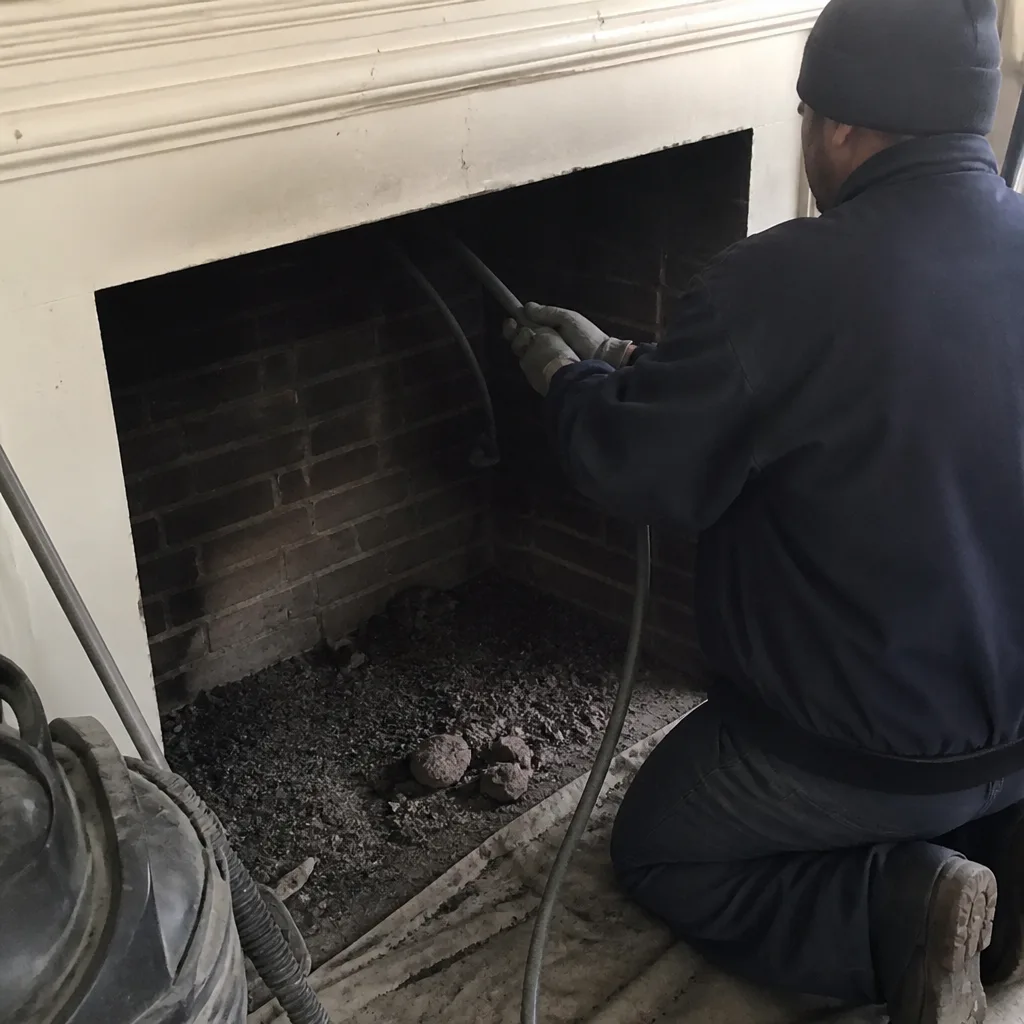 Before
 After
After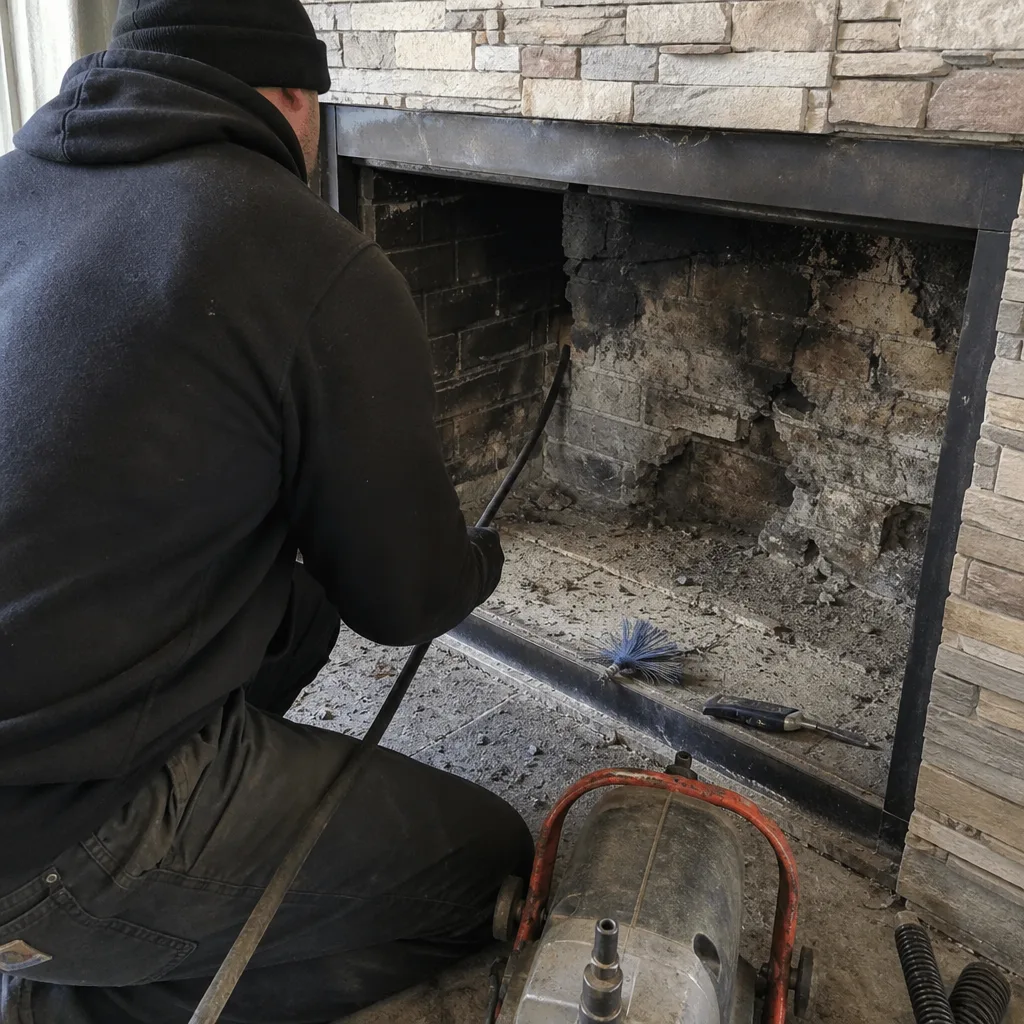 Before
 After
After